Etienne Psaila
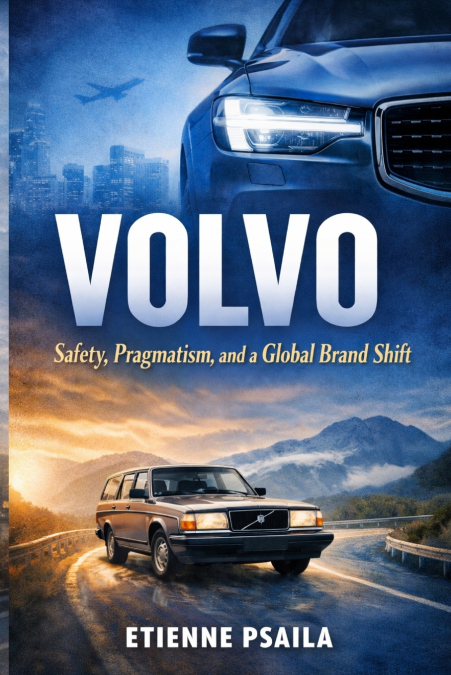
Volvo is often reduced to a single idea-safety-but the company’s real achievement was building a durable engineering culture that treated safety as a system, not a slogan. From early Gothenburg production shaped by Swedish industrial discipline and Nordic reality, Volvo developed cars that prized structural integrity, restraint design, usability, and longevity-qualities that became synonymous with family transport across export markets.This book follows how Volvo’s 'pragmatic premium' identity formed and held through shocks that routinely break carmakers: regulation, emissions upheavals, recessions, shifting consumer tastes, and the technological reset of electrification and software-defined vehicles. It tracks the brand-defining model eras-especially the long-lived wagon and 240 reputations-and then shows how Volvo navigated global platform politics, entered the SUV age without abandoning core principles, and accelerated modernization under new ownership and global production logic.Rather than treating ownership as footnotes, the narrative places corporate structure and governance at the center: how capital access, alliances, and strategic control shaped engineering priorities, manufacturing footprints, product cadence, and brand messaging. The result is a fact-driven, reader-friendly account of how a company known for caution repeatedly adapted-and why the most consistent feature of Volvo’s history is not a model line, but a disciplined approach to risk.