Etienne Psaila
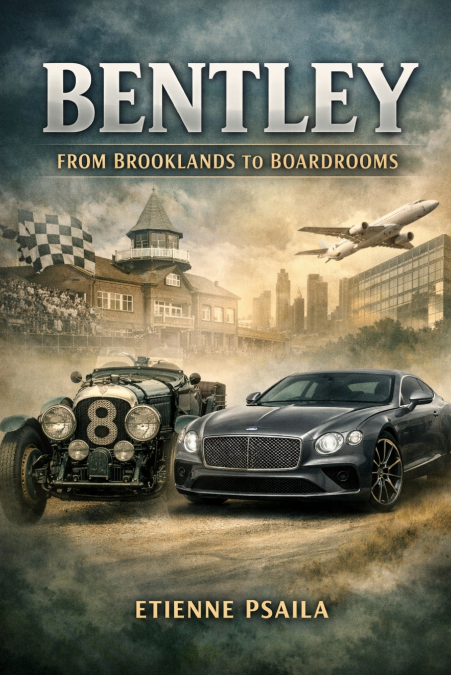
Bentley’s name was forged in a Britain learning to live with speed: first on the rough roads of the early 1920s, then under the bright scrutiny of Brooklands and the punishing certainty of endurance racing. From the beginning, the marque carried a clear proposition-build cars that could run hard for long distances, combining mechanical durability with a sense of occasion that never relied on fragility or fashion. Those values were tested repeatedly: by the costs of competition, by the limits of small-scale manufacturing, by war and postwar scarcity, and by the corporate realities that eventually ended independence.This book traces Bentley as both an engineering culture and a business-how its early reputation was created, how the famous Le Mans victories became lasting mythology, and how the brand’s identity was managed through long decades of shared platforms and changing market expectations. It examines the people and systems that kept Bentley credible when prestige alone could not pay bills: the manufacturing workforce, the apprenticeship traditions, the craft standards, and the strategic decisions made in boardrooms that determined what Bentley could build, and why.Moving into the modern era, the narrative follows Bentley’s transformation into a disciplined global luxury manufacturer-expanding product reach, professionalizing governance, and turning personalization into both artistry and margin. It also confronts the defining pressures of today’s luxury car trade: emissions compliance, safety regulation, supply-chain shocks, and the accelerating shift to hybrids and full electrification. The result is a fact-driven account of how one of Britain’s most storied names repeatedly reinvented itself-without losing the core promise that made the badge matter.