Etienne Psaila
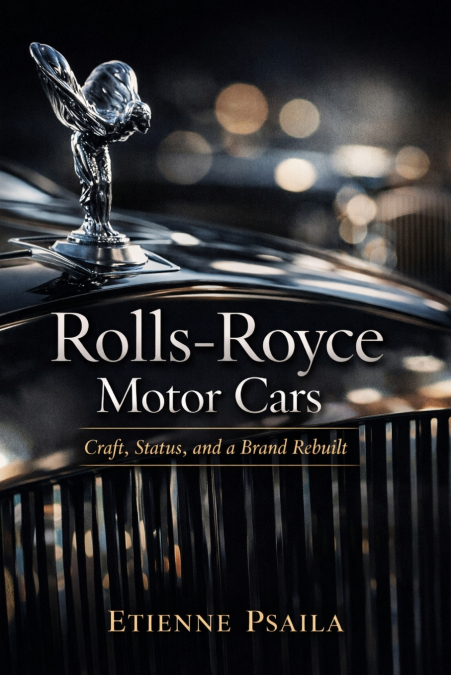
Rolls-Royce has outlived the industrial world that created it. The name began as a promise of mechanical credibility in an age when cars still frightened their owners with unreliability and noise, then grew into a cultural shorthand for calm authority-power made invisible through refinement. Over more than a century, the business behind that badge has been repeatedly remade: wars that expanded engineering ambition, postwar manufacturing realities at Crewe, corporate crises and structural separation, late-twentieth-century stewardship under mounting global competition, and the defining 1998 split that sent Bentley and Rolls-Royce onto separate roads.This book follows the marque as both product and institution. It traces how the brand learned to sell 'restraint' as a form of status, how manufacturing and labor disciplines protected quality at low volume, and how ownership politics reshaped what could be built and where. The modern Goodwood era is treated not as a mere revival but as a rebuild-new facilities, new governance, new global strategy-tasked with delivering continuity in craft while meeting modern regulation, digital expectations, and an electrified future. Rolls-Royce remains singular not because it avoided change, but because it learned to make change feel quiet.