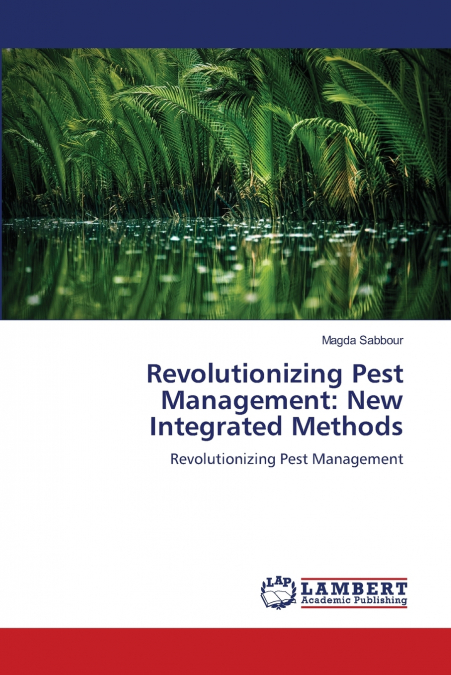
Revolutionizing Pest Management

Revolutionizing Pest Management

Magda Sabbour

91,01 €
IVA incluido
Disponible
Editorial:
KS OmniScriptum Publishing
Año de edición:
2025
Materia
Botánica y ciencias de las plantas
ISBN:
9786207640737
91,01 €
IVA incluido
Disponible
Añadir a favoritos

Integrated Pest Management (IPM) is an environmentally sensitive approach to pest control that combines biological, cultural, mechanical, and chemical methods to minimize economic, health, and environmental risks. In recent years, innovative strategies have emerged to enhance the effectiveness and sustainability of IPM practices. These new approaches include the use of precision agriculture technologies, such as remote sensing and GPS-guided equipment, as well as the application of biological control agents like parasitoids, predators, and microbial pesticides. Advances in genetic engineering, including pest-resistant crop varieties and RNA interference (RNAi), are also reshaping IPM frameworks. Additionally, the integration of data analytics and artificial intelligence (AI) is enabling more accurate pest forecasting and targeted interventions. This paper explores these cutting-edge developments, evaluates their benefits and limitations, and discusses their potential to transform pest management into a more sustainable and resilient system.
Artículos relacionados

  • Omics in Plant Disease Resistance
    Vijai Bhadauria
    ...
  • Suitable Microbial Strain for Enhanced Production of Laccase
    Lalit Kumar Singh
    Enzymes are known to humanity since ancient times and getting increased impetus in the recent years due to its increasing importance in industries. Proteins enzymes are essentially created by living things to control their biochemical activities. Enzymes can also be thought of as catalysts that speed up biological reactions on their own. Based on their catalysed reaction types,...
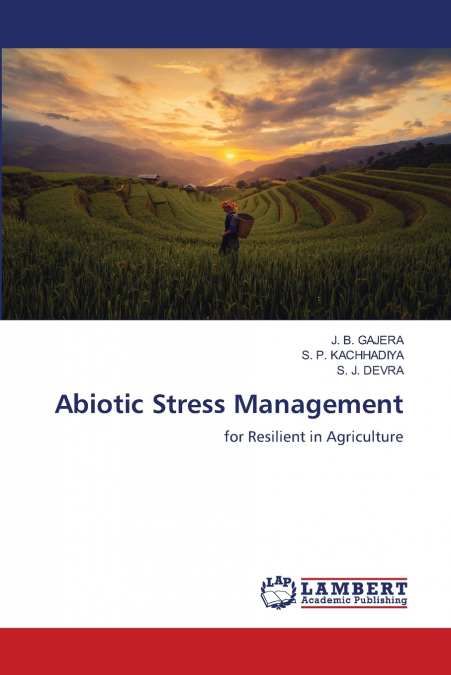
  • Abiotic Stress Management
    J. B. GAJERA / S. J. DEVRA / S. P. KACHHADIYA
    'Abiotic Stress Management for Resilient Agriculture' offers a comprehensive guide to addressing environmental challenges in agriculture. This book explores innovative strategies and cutting-edge research to mitigate the impact of abiotic stresses such as drought, salinity, and extreme temperatures on crops. It provides practical insights into sustainable agricultural practices...
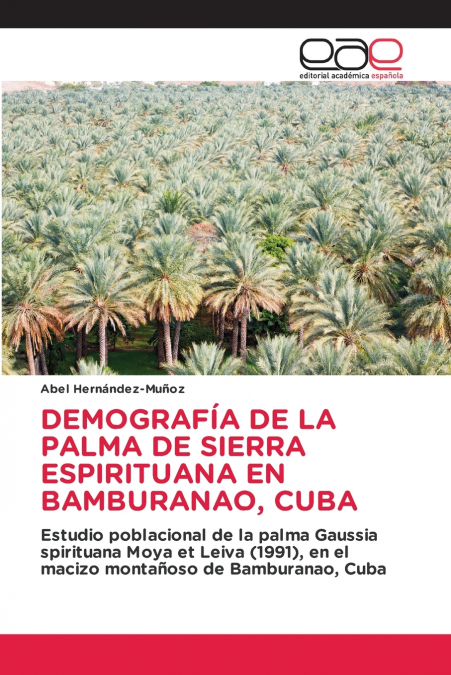
  • DEMOGRAFÍA DE LA PALMA DE SIERRA ESPIRITUANA EN BAMBURANAO, CUBA
    Abel Hernández-Muñoz
    Las poblaciones vegetales constituyen en muchos casos, fuentes importantes de recursos en los aspectos agropecuarios, forestales, recreativos y como refugio de fauna, por ello, su estudio es un aspecto necesario a abordar. Dentro de las características de las poblaciones de plantas en general, la densidad y distribución son importantes. La presente obra constituye el primer est...
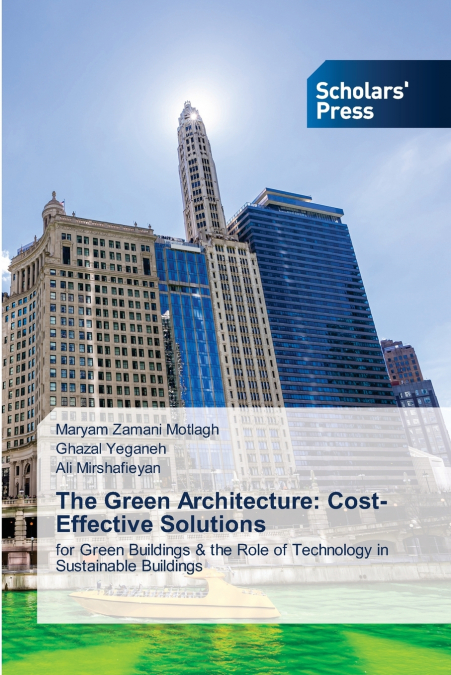
  • The Green Architecture
    Ali Mirshafieyan / Ghazal Yeganeh / Maryam Zamani Motlagh
    Protecting green energy as well as non-renewable energy, as well as their sustainable use, many advances in the technology of extracting oil products and other reserves under the ground have caused many improvements. In this regard, proposing the design of buildings in which the consumption of fossil fuels reaches its lowest level is considered one of the important solutions in...
    Disponible

    82,54 €

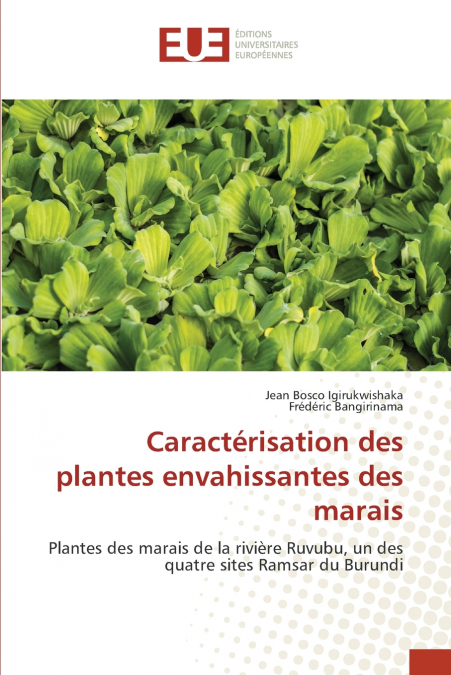
  • Caractérisation des plantes envahissantes des marais
    Frédéric BANGIRINAMA / Jean Bosco Igirukwishaka
    Les invasions biologiques constituent la seconde source de destruction des écosystèmes. Mais les connaissances sur les taxons envahissants restent lacunaires au Burundi. Pour appuyer les gestionnaires des plantes envahissantes, une étude a été conduite dans les marais de la rivière Ruvubu, la plus importante rivière du Burundi. L’objectif étant de : Faire un inventaire floristi...

Otros libros del autor

  • Rivoluzionare la gestione dei parassiti
    Magda Sabbour
    La gestione integrata dei parassiti (IPM) è un approccio ecologico al controllo dei parassiti che combina metodi biologici, culturali, meccanici e chimici per ridurre al minimo i rischi economici, sanitari e ambientali. Negli ultimi anni sono emerse strategie innovative per migliorare l’efficacia e la sostenibilità delle pratiche di IPM. Questi nuovi approcci includono l’uso di...
    Disponible

    92,35 €

  • Rewolucja w zarządzaniu szkodnikami
    Magda Sabbour
    Zintegrowana ochrona przed szkodnikami (IPM) to wrażliwe na środowisko podejście do zwalczania szkodników, które łączy metody biologiczne, kulturowe, mechaniczne i chemiczne w celu zminimalizowania zagrożeń ekonomicznych, zdrowotnych i środowiskowych. W ostatnich latach pojawiły się innowacyjne strategie mające na celu zwiększenie skuteczności i trwałości praktyk IPM. Te nowe p...
    Disponible

    92,33 €

  • Révolutionner la lutte contre les ravageurs
    Magda Sabbour
    La lutte intégrée contre les parasites (IPM) est une approche écologique de la lutte contre les parasites qui combine des méthodes biologiques, culturelles, mécaniques et chimiques afin de minimiser les risques économiques, sanitaires et environnementaux. Ces dernières années, des stratégies innovantes sont apparues pour améliorer l’efficacité et la durabilité des pratiques de ...
    Disponible

    92,33 €

  • Revolutionierung der Schädlingsbekämpfung
    Magda Sabbour
    Integrierte Schädlingsbekämpfung (IPM) ist ein umweltfreundlicher Ansatz zur Schädlingsbekämpfung, der biologische, kulturelle, mechanische und chemische Methoden kombiniert, um wirtschaftliche, gesundheitliche und ökologische Risiken zu minimieren. In den letzten Jahren wurden innovative Strategien entwickelt, um die Wirksamkeit und Nachhaltigkeit der IPM-Praktiken zu verbesse...
    Disponible

    92,32 €

  • Revolucionar a gestão das pragas
    Magda Sabbour
    A gestão integrada das pragas (IPM) é uma abordagem ambientalmente sensível ao controlo das pragas que combina métodos biológicos, culturais, mecânicos e químicos para minimizar os riscos económicos, sanitários e ambientais. Nos últimos anos, surgiram estratégias inovadoras para aumentar a eficácia e a sustentabilidade das práticas de GIP. Estas novas abordagens incluem a utili...
    Disponible

    92,35 €

  • Wirkung von mikrobiellen Bekämpfungsmitteln auf die Nematoden
    Magda Sabbour
    Die Auswirkungen von Nematoden auf die Landwirtschaft sind erheblich. Diese Schädlinge sind jährlich für Ernteverluste in Milliardenhöhe verantwortlich und befallen eine Vielzahl von Pflanzen, darunter Gemüse, Obst, Getreide und Zierpflanzen. Nematoden wie Meloidogyne (Wurzelknotnematoden), Heterodera (Zystennematoden) und Pratylenchus (Läsionsnematoden) gehören zu den berüchti...
    Disponible

    90,92 €