MD Ramon C. Henson
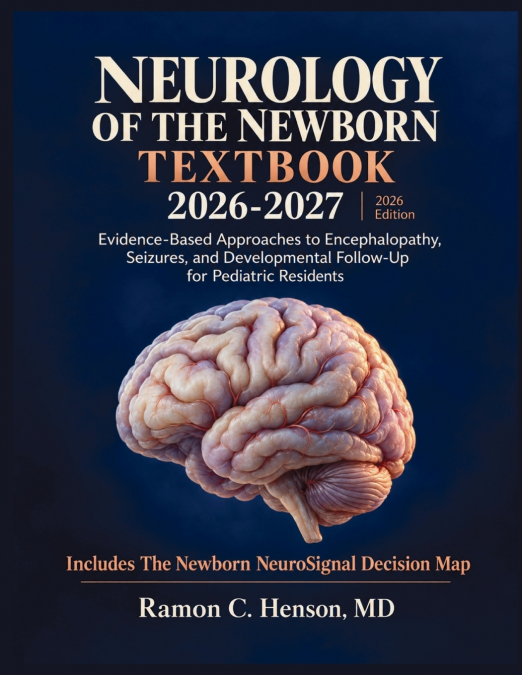
Turn Subtle NICU Signals into Defensible Clinical Decisions Newborn neurologic care demands decisions while examination findings, cerebral physiology, EEG patterns, and imaging appearances are still evolving. This clinical reference connects developmental neurobiology with bedside assessment, neuromonitoring, acute stabilization, etiologic diagnosis, family communication, and long-term surveillance for trainees caring for vulnerable infants. Twenty-four chapters move from fetal nervous-system development through encephalopathy, seizures, hemorrhage, stroke, infection, metabolic and genetic disease, malformations, neuromuscular disorders, complex intensive care, prognosis, and early intervention. The Newborn NeuroSignal Decision Map links each observed signal to localization, urgency, the investigation most likely to change care, a management anchor, and a guardrail around prognosis. Clinical Capabilities Developed Across the Book • Developmental examination - interpret state, tone, cranial function, reflexes, asymmetry, and abnormal movements against gestational maturity• Multimodal neuromonitoring - combine continuous EEG, amplitude-integrated EEG, NIRS, cardiorespiratory trends, and serial bedside findings• Imaging selection - match cranial ultrasound, MRI sequences, vascular studies, or urgent CT to stability and mechanism• Acute brain injury care - recognize encephalopathy, hypoxic-ischemic evolution, hemorrhage, stroke, infection, and white matter injury• Seizure reasoning - distinguish electroclinical events, pursue etiology, evaluate treatment response, and plan medication discontinuation• Precision diagnosis - integrate metabolic, mitochondrial, genomic, malformation, neuromuscular, and movement phenotypes• Longitudinal care - communicate uncertainty, coordinate early intervention, and track motor, sensory, feeding, cognitive, language, and behavioral outcomes Use this volume to connect the infant’s changing signal with the next clinically defensible action.