MD Ramon C. Henson
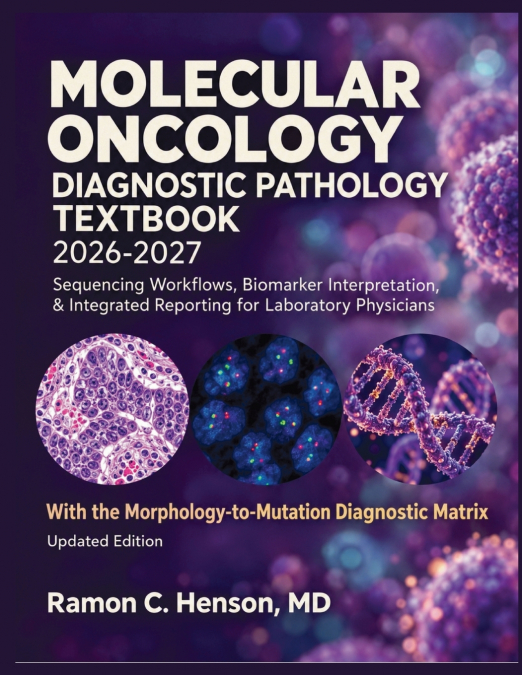
Integrate Tumor Biology with Diagnostic Evidence Modern cancer diagnosis depends on the disciplined integration of morphology, immunophenotype, specimen quality, assay performance, and genomic evidence. This 2026-2027 edition follows the full laboratory pathway from tissue selection and validation through sequencing, bioinformatics, variant classification, liquid biopsy, organ-system applications, immune biomarkers, resistance, and multidisciplinary interpretation. It is written for residents, fellows, practicing pathologists, laboratory physicians, and clinicians who need transparent conclusions rather than detached variant lists. The recurring Morphology-to-Mutation Diagnostic Matrix makes discordance, assay limits, and clinical consequences visible at the point of sign-out. Develop practical capability across the diagnostic pathway:• Specimen stewardship and tumor enrichment - preserve limited tissue while matching material quality to the intended assay• Validation, quality metrics, and failure analysis - distinguish trustworthy signals from preanalytic, analytic, and bioinformatic artifacts• Sequence, copy-number, fusion, and methylation evidence - select methods that can detect the alteration class under consideration• Somatic variant classification and reporting - separate diagnostic support, prognosis, treatment relevance, and possible inherited risk• Liquid biopsy and residual disease assessment - interpret low-level plasma findings through shedding biology and clonal hematopoiesis• Organ-system molecular classification - connect lineage, microscopic pattern, immunophenotype, and genomic architecture across major tumor groups• Immune biomarkers, resistance, and tumor-board synthesis - communicate actionability, uncertainty, longitudinal change, and equity constraints Use this volume to produce molecular reports that are precise, traceable, clinically bounded, and faithful to the tissue diagnosis.