Shane Larson
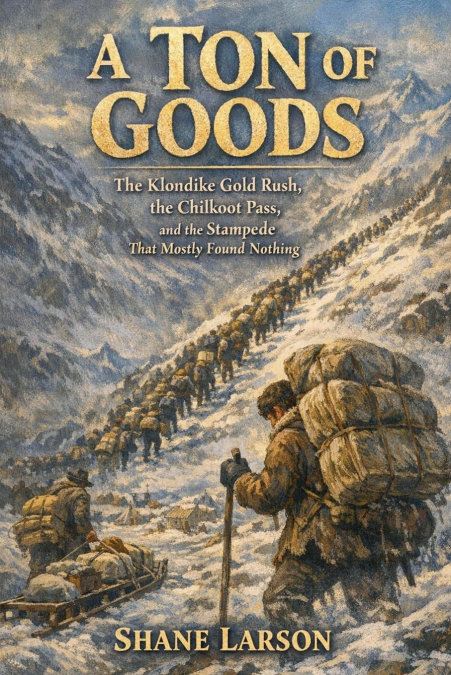
About 100,000 people set out for the Klondike. The creeks had been staked from end to end eleven months before the first of them left home.On 17 July 1897 the steamer Portland tied up in Seattle with sixty-eight miners and what one newspaper called a ton of gold aboard. It was closer to two. Within a week the continent was packing. What the miners also told the reporters, and the papers printed below the fold, was that Bonanza and Eldorado had been claimed in August 1896 by the few hundred men already in the Yukon, and worked for a winter. The stampede was a race for ground that was already gone, and the money in it was made by the people who sold the racers their supplies.Getting there was the story. The Canadian police would let nobody over the summit without a year’s food, roughly a ton a person, and on the Chilkoot the last pitch could be climbed by nothing but a human being. Fifty or sixty pounds a trip. Thirty or forty trips. More than 2,000 miles of walking for every ton that reached the lakes. On the White Pass next door, about 3,000 horses died in a single autumn. Then a boat to build, a canyon to run, and 500 miles of river to Dawson, where perhaps 30,000 to 40,000 of the hundred thousand arrived to find a city of tents and nothing left to stake.It happened in someone’s country. The discovery party on Rabbit Creek was a Tagish family: George Carmack, his wife Shaaw Tláa (Kate Carmack), her brother Keish (Skookum Jim Mason) and their nephew Káa Goox (Dawson Charlie), and the people who were there disagreed about which of them saw the gold first. The book lets them disagree. The Hän fishing camp at the Klondike’s mouth became Dawson City, and Chief Isaac moved his people three miles downriver to Moosehide to get them clear of it. The Tlingit who had controlled the passes for generations packed the stampeders’ goods over them at a price they set, until a railway ended the trade.What you’ll learn:Why the richest ground was in a few hundred hands before the Portland docked, and how the miners said so on the dayWhat a ton of goods weighed, cost and took to move from the beach at Dyea to Lake BennettHow 7,124 homemade boats, numbered and registered by the police, left the lakes when the ice went out on 29 May 1898Why Dawson, a city of tens of thousands, had almost no murders while Skagway was run by a confidence man, and where the Mountie legend outruns the recordWhat the rush cost the Tagish, the Tlingit and the Hän, and how the Tr’ondëk Hwëch’in tell it nowWho kept their fortunes, who died broke, and why the lasting money was made in SeattleThis book is for you if:You know the photograph of the line on the Golden Stairs and want to know what the men in it were carrying and whyYou are sailing the Inside Passage or hiking the Chilkoot and want the history under the boardwalks of SkagwayYou read frontier and gold-camp history and want the figures hedged the way the sources hedge themYou want the First Nations in the story as people with names, not as backgroundThe gold went to a few hundred. The ton of goods is what a hundred thousand carried, and it is what the Klondike was.