Ramon C. Henson
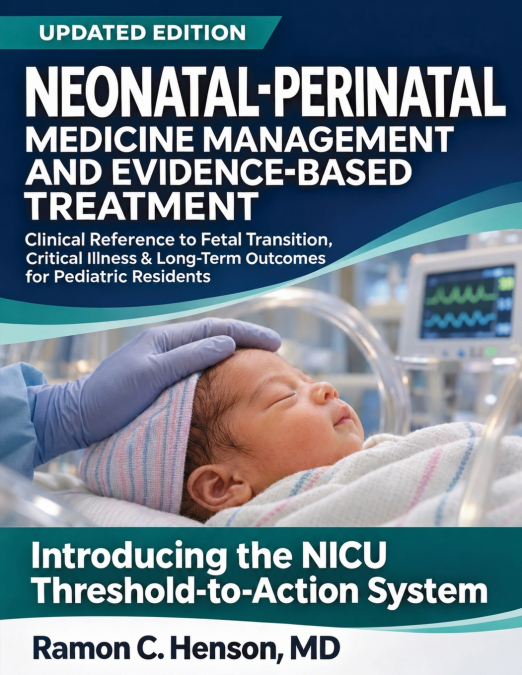
Move From a Changing Neonatal Signal to the Right Action Neonatal-perinatal care demands decisions that account for gestational age, postnatal transition, rapidly changing physiology, and the interaction of every organ system. This clinical reference connects fetal and developmental mechanisms to delivery-room stabilization, respiratory and hemodynamic support, nutrition, infection, neurologic injury, surgical disease, and longitudinal outcomes. It is written for pediatric residents, neonatal fellows, advanced-practice clinicians, and multidisciplinary NICU teams who need a defensible path from finding to intervention. Twenty-four chapters and the NICU Threshold-to-Action Atlas organize clinical signals, mechanism maps, decision thresholds, action sequences, and safety boundaries for bedside use. Build These Neonatal Clinical Capabilities Stabilize transition at birth - connect lung aeration, pulmonary blood flow, oxygen targeting, and heart-rate response to the next resuscitation action. Match respiratory support to physiology - distinguish surfactant deficiency, air leak, pulmonary vascular disease, apnea, and evolving chronic lung disease. Interpret perfusion beyond blood pressure - integrate preload, shunts, contractility, lactate, urine output, and targeted echocardiography. Protect nutrition and intestine - advance human-milk feeding, fortification, and parenteral support while recognizing NEC, obstruction, and intestinal failure. Treat infection with diagnostic discipline - separate early- and late-onset risk, obtain meaningful cultures, select empiric therapy, and narrow by evidence. Recognize neurologic emergencies - use examination, EEG, ultrasound, and MRI to manage encephalopathy, hemorrhage, stroke, and neonatal seizures. Coordinate the extremely preterm course - reduce device, skin, oxygen, phlebotomy, pain, and developmental burdens across prolonged intensive care. Prepare safe discharge and follow-up - align feeding, home technology, caregiver competence, neurodevelopmental surveillance, equity, and family goals. Use the threshold-to-action framework to make neonatal decisions earlier, explain them clearly, and reassess them safely.