Etienne Psaila
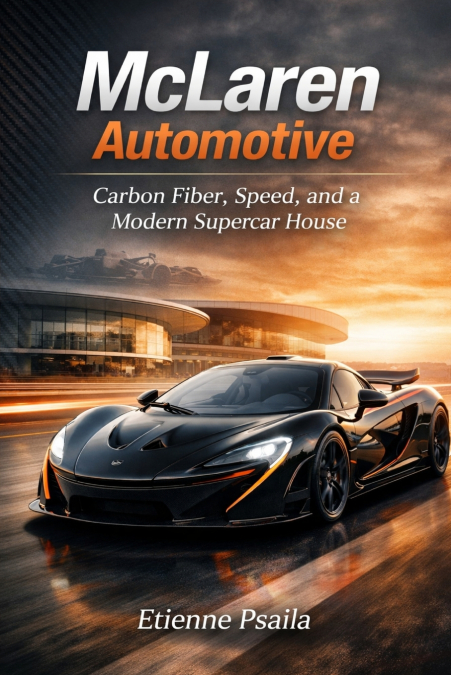
McLaren Automotive didn’t inherit a century of road-car tradition-it built a modern supercar business almost from first principles, using racing discipline as its operating system and carbon fibre as its defining architecture. From the MP4-12C onward, McLaren set out to prove that extreme performance could be engineered into a repeatable, warrantied, global product: light, stiff, fast, and confidence-inspiring on real roads, not just on perfect circuits.This book follows that industrial journey in full: the factory logic of Woking, the reality of building carbon tubs at volume, the push-and-pull between engineering ambition and manufacturing maturity, and the retail and service systems required to earn customer trust. It tracks McLaren’s product cadence-from the early range-building years through the Ultimate Series halo strategy-and shows how motorsport proximity became both technology input and brand capital.Just as important, it examines the business pressures that shaped the modern era: financing, ownership power, market cycles, and the costly transition toward hybrid and electrified performance. The result is a fact-driven narrative of how a racing-born organisation tried to become a durable global manufacturer-while protecting the one thing it cannot afford to lose: the clarity of what a McLaren is supposed to feel like.