Etienne Psaila
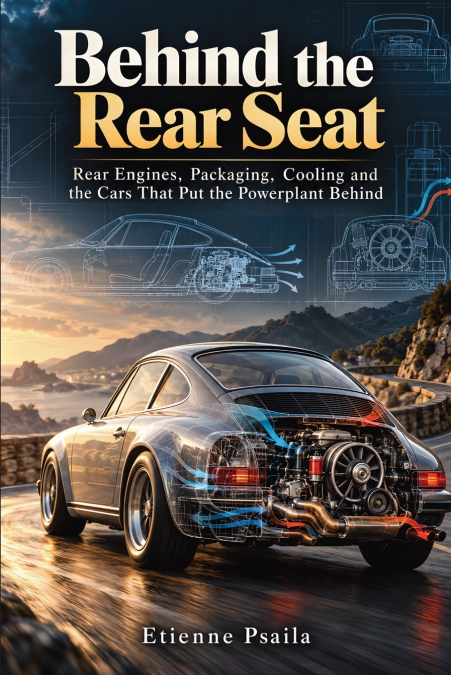
Why did generations of cars carry their engines behind the passengers, and why did most manufacturers eventually abandon the idea? Behind the Rear Seat explores one of the most distinctive chapters in automotive engineering: the rise, development and changing fortunes of the rear-engined car. From the Volkswagen Beetle and Renault 4CV to the Fiat 600, Chevrolet Corvair and Porsche 911, rear-mounted engines helped shape some of motoring’s most recognisable vehicles. Their position offered important advantages in traction, drivetrain simplicity and passenger space, but it also created challenges involving cooling, handling, luggage accommodation and safety. Etienne Psaila explains the engineering behind these decisions in clear, accessible language, revealing how manufacturers balanced mechanical ingenuity against manufacturing costs, everyday practicality and changing expectations. The story moves from pioneering European experiments and post-war family cars to high-performance sports cars, compact city vehicles and the arrival of rear-mounted electric motors. More than a history of individual models, this is the story of an automotive architecture that repeatedly challenged convention, transformed everyday motoring and never entirely disappeared. Disclaimer: This is an independent historical and educational work and is not affiliated with, sponsored by or endorsed by any vehicle manufacturer. All trademarks, brand names and model names mentioned are the property of their respective owners and are used solely for identification and historical commentary. Technical explanations are provided for general information, not as vehicle repair or safety instructions.