Charlotte Perkins Gilman
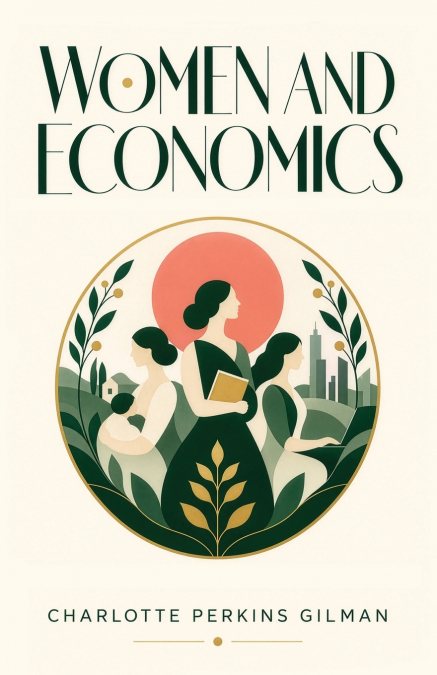
What happens when an entire society makes women’s economic security dependent on men? In Women and Economics, pioneering feminist thinker Charlotte Perkins Gilman challenges the traditions that have shaped marriage, motherhood, domestic labor, and women’s opportunities for centuries.Writing at the close of the nineteenth century, Gilman examines a fundamental contradiction in the economic organization of society: women perform essential labor within the home, yet their financial security has historically depended upon the earnings of husbands and fathers. She argues that this arrangement restricts women’s independence, limits their intellectual and professional development, and places unnecessary pressures on marriage and family relationships. Rather than accepting these conditions as natural or inevitable, Gilman investigates how they developed and why they might be changed.At the heart of her argument is the belief that economic independence is essential to genuine equality. Gilman challenges the assumption that domestic responsibilities must define a woman’s identity or prevent her from participating fully in the wider economy. She examines the division of labor between men and women, the economic consequences of marriage, and the ways traditional expectations influence both individual lives and social progress. Her proposed reforms include professionalizing domestic services, reorganizing household labor, and creating greater opportunities for women to support themselves through meaningful work.First published in 1898, Women and Economics: A Study of the Economic Relation Between Men and Women as a Factor in Social Evolution became one of the defining works of early feminist social thought. Drawing upon economics, sociology, and the evolutionary theories of her era, Gilman presents a sweeping critique of established gender roles and argues that women’s economic advancement would benefit society as a whole. Her analysis reflects the intellectual assumptions and limitations of her historical period while anticipating debates that remain central to discussions of gender and economic equality.More than a historical argument for women’s rights, Women and Economics invites readers to reconsider the relationship between financial freedom, personal identity, family responsibilities, and social opportunity. For those interested in feminist history, economic inequality, women’s labor, or the development of modern social thought, Gilman’s work offers a revealing examination of how economic arrangements shape human lives-and how changing those arrangements might create a more equitable society.