Mark E Dixon
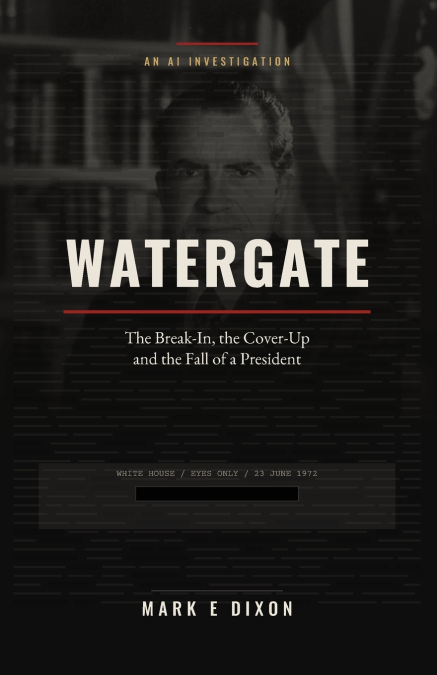
At half past two on the morning of 17 June 1972, five men in business suits were arrested inside the headquarters of the Democratic National Committee. They were carrying cameras, lock picks, listening devices and hundred-dollar bills with sequential serial numbers. The White House called it a third-rate burglary. Twenty-six months later the President of the United States resigned. This book goes back to the documents - the White House tapes, the prosecution files, the committee reports and the grand jury material released across fifty years - and sets out, stage by stage, what the record establishes, what it merely permits, and what it cannot settle at all. Nine questions remain genuinely open. They are named, and they are not tidied away.What emerges is not the familiar morality play. It is an account of an apparatus: a machinery of surveillance and covert action inherited rather than invented, turned inward on domestic opponents, and defended by men who knew exactly what they were doing. The system held. It held narrowly, and only because one man had been recording himself.