Inicio > Sociedad y ciencias sociales > Política y gobierno > The United States and the Atlantic Community
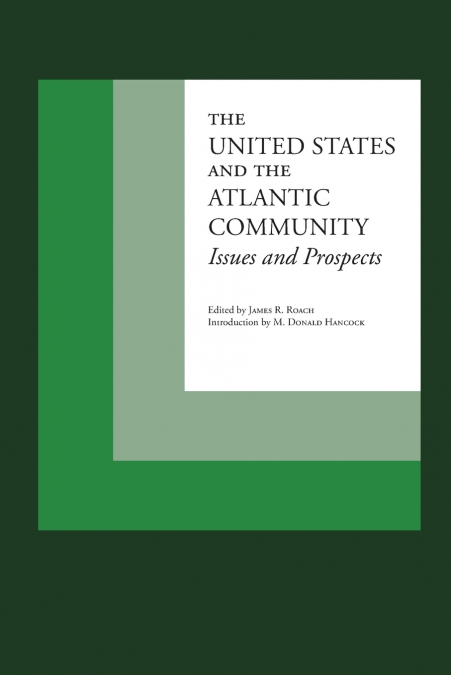
The United States and the Atlantic Community

The United States and the Atlantic Community


27,06 €
IVA incluido
Disponible
Editorial:
Univ of Chicago behalf of University of Texas
Año de edición:
1967
Materia
Política y gobierno
ISBN:
9780292766426
27,06 €
IVA incluido
Disponible
Añadir a favoritos

The restiveness among some members of the North Atlantic Treaty Organization as to its structure and functions was an indication not of the failure of NATO, but of a need for a new adjustment to the changes that had developed in world conditions since the organization was established. Such was the consensus underlying the comments of five eminent statesmen and political theorists in a series of lectures delivered at the University of Texas in the spring of 1966 on the general theme of 'The United States and the Atlantic Community: Issues and Prospects.' The grave crisis of confidence in the Atlantic Community resulted, ironically, from the success of NATO in combining the resources of thirteen European states with those of Canada and the United States in a common achievement of peace, economic stability, and security in the face of the postwar threat from the Soviet Union. Now that these objectives are obtained, one argument ran, NATO is no longer needed. The Soviet threat still exists, went another, and seems to be dispelled only because of the presence of NATO; what is needed is revision of policies and functions of the organization to fit new conditions. The changes in the nature of international relations in the two decades after World War II were of two kinds: those inherent in the world international situation-the economic recovery of Europe (which brought new urgency to the desire for more independence from the United States), the disintegration of European colonial empires, the softened aspect of the Soviet threat, and the great advances in modern technology; and those that depended upon policy decisions-whether Europe should be a confederacy (as advocated by De Gaulle) or a federal union (as advocated by Jean Monnet) and what should be the international policy of a united Europe on such issues as a third force between the United States and Russia, unified or separate approaches to the East and the West, German unity, and military security. A consideration of what these changes implied for the United States was the purpose of the series of papers collected in this volume. The names of the authors and the titles of their papers indicate the variety of views and interests expressed and the scope of the discussion: Henry A. Kissinger, Professor of Government at Harvard, 'NATO: Evolution or Decline' André Philip, Professor of Economics at the Sorbonne, 'The Atlantic Economy: Partners and Rivals' Hans Speier, member of the RAND Corporation Council, 'Germany: The Continuing Challenge' Fritz Erler, a leader of the German Social Democratic Party, 'Western Europe, Eastern Europe, and the Soviet Union' John J. Mccloy, former World Bank president and former U.S. military governor and high commissioner for Germany, 'American Interests and Europe’s Future.'
Artículos relacionados

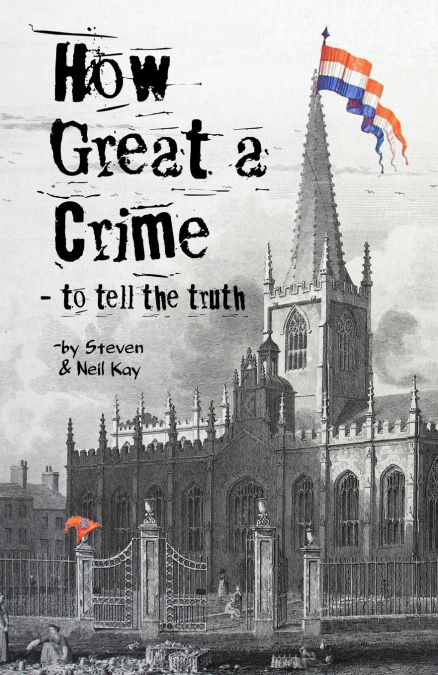
  • How Great a Crime - to tell the truth
    Neil Kay / Steven Kay
    Joseph Gales was one of the all-time great Sheffielders – forget Joe Cocker, Jessica Ennis-Hill, Sean Bean or Michael Palin. These are all minnows compared to Joseph Gales – and their stories are boring besides that of the Galeses. The Galeses story has been forgotten and has not been brought together in one place before – it is not just something dredged up from history – an i...
    Disponible

    10,33 €

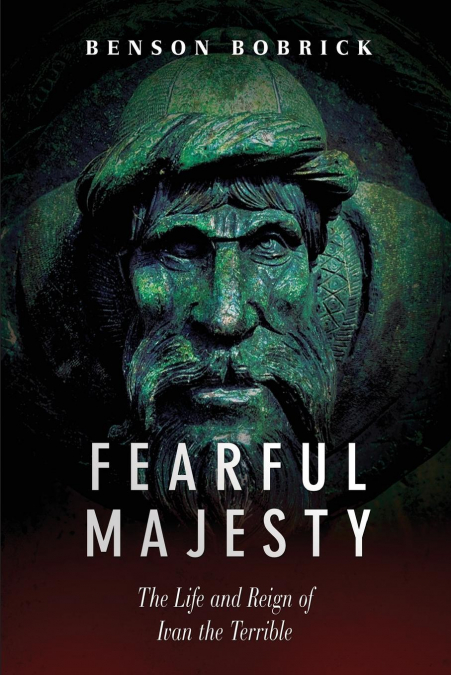
  • Fearful Majesty
    Benson Bobrick
    Ivan the Terrible - the name evokes the legend of a cruel and dangerously insane tyrant. Fearful Majesty explores that legend and exposes the man, his nature, and his time.This acclaimed biography of one of Russia’s most important and tyrannical rulers is not only a rich, readable biography, it is also surprisingly timely, revealing how many of the issues Russia faces today hav...
    Disponible

    19,27 €

  • Economic Optimization of Innovation & Risk
    Robert Shuler
    A Theory of Crash Rate for Private & Public Projects with Critical or non-Critical systems.Analyzing & managing risk has been a quest for 5000 years, and is essential to everything from water supplies, finance, and agriculture to computers and space travel. At last there is a quantitative theory and a simple equation that allows you to: - choose your failure rate - get there...
    Disponible

    13,02 €

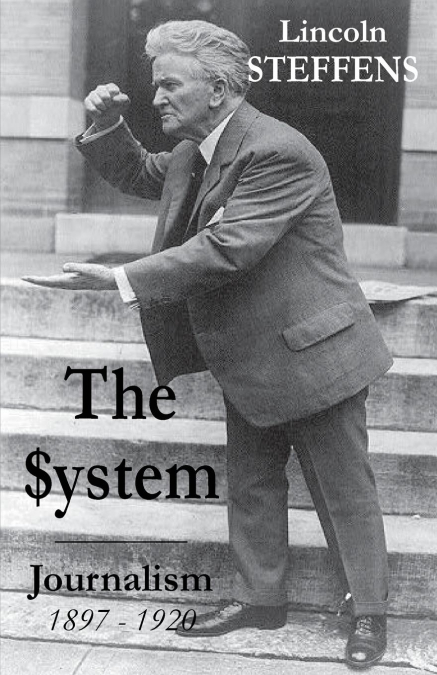
  • The System
    Lincoln Steffens
    The 'muckraker' Lincoln Steffens dug deep into business criminality and political corruption in a powerful series of articles written for McClure's magazine. Establishment newspapers and 'System' politicians dismissed his work as just another example of the decrepit modern journalism that could never pass for genuine writing. But Steffens' dogged quest for truth and justice set...
    Disponible

    23,66 €

  • Digital Activism in Asia Reader
    The digital turn might as well be marked as an Asian turn. From flash-mobs in Taiwan to feminist mobilisations in India, from hybrid media strategies of Syrian activists to cultural protests in Thailand, we see the emergence of political acts that transform the citizen from being a beneficiary of change to becoming an agent of change. In co-shaping these changes, what the digit...
    Disponible

    22,19 €

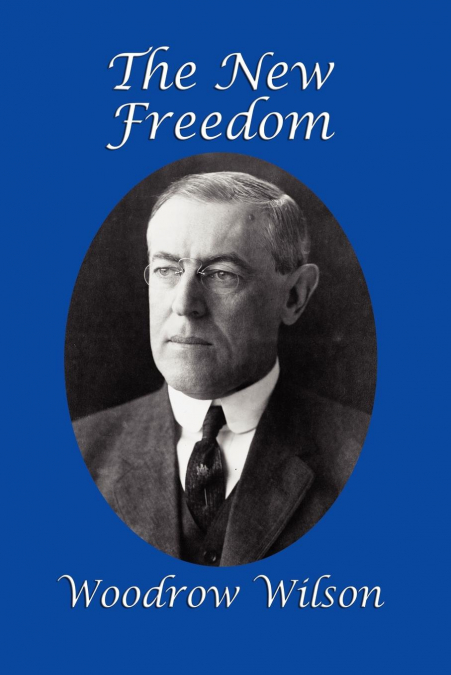
  • The New Freedom
    Woodrow Wilson
    In 1912, Woodrow Wilson was the Democratic nominee for President of the United States. He campaigned against the Republican incumbent, William Howard Taft, and Taft’s predecessor, Theodore Roosevelt, who had split off from the Republican Party to form his own Progressive, or Bull Moose, Party. Much of the campaign focused on the US economy, particularly the candidates’ views of...
    Disponible

    8,67 €