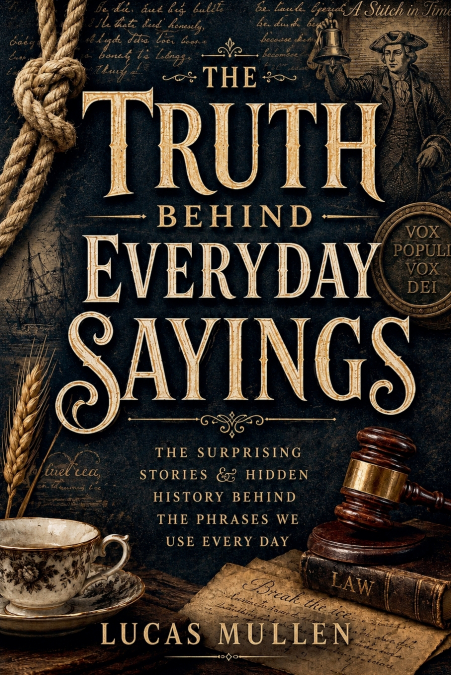
The Truth Behind Everyday Sayings

The Truth Behind Everyday Sayings

Lucas Mullen

16,73 €
IVA incluido
Disponible
Editorial:
Old Lantern House Books
Año de edición:
2026
Materia
Lingüística histórica y comparada
ISBN:
9798235925786
16,73 €
IVA incluido
Disponible
Añadir a favoritos

Where did our everyday sayings really come from?Every day, we use phrases that are far older than we realise. We tell someone not to let the cat out of the bag, describe a calm person as cool as a cucumber, warn a friend they are barking up the wrong tree, or admit that an idea was only half baked.But behind these familiar sayings are centuries of ships, farms, courtrooms, kitchens, theatres, battlefields, folklore, scripture, medicine, and trade.The Truth Behind Everyday Sayings uncovers the surprising stories and hidden history behind the phrases we still use today. From nautical language born on storm-tossed ships to old courtroom expressions, kitchen idioms, biblical sayings, rural proverbs, superstitions, and modern office slang, this book traces ordinary words back to the worlds that created them.Inside, you will discover:The real origins of famous everyday phrasesThe myths and false stories behind popular sayingsHow sailors, farmers, soldiers, judges, cooks, and storytellers shaped the English languageWhy some expressions survived for centuriesThe hidden history still buried inside ordinary speechSome origins are practical. Some are dark. Some are funny. Some are uncertain. And some popular explanations are not true at all.Written in a clear and engaging style, this book separates real history from colourful myth and reveals how much of the past is still hiding inside the words we use without thinking.Perfect for readers who love language, trivia, folklore, hidden history, word origins, curious facts, and the strange stories behind everyday expressions.
Artículos relacionados

  • The Language of Separation - Nationalism’s Impact on Linguistic Diversity
    PS Publishing
    'The Language of Separation' delves into the intricate relationship between nationalism and linguistic diversity. Exploring the impact of nationalist ideologies on language policies and practices, this book examines how notions of nationhood influence linguistic identity and representation. Through compelling analysis , it sheds light on the complexities of language politics an...
    Disponible

    14,22 €

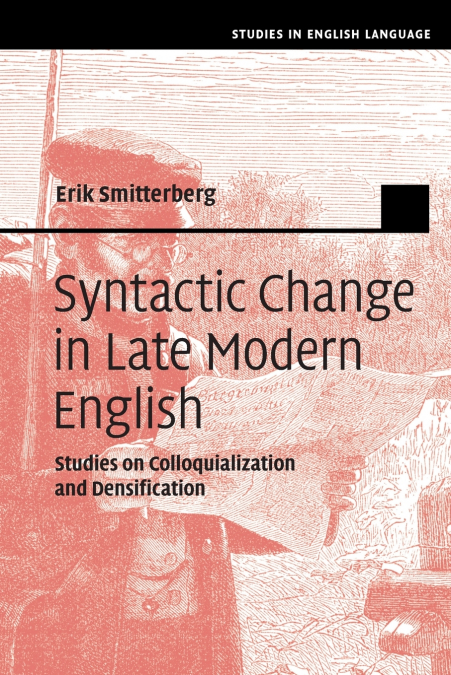
  • Syntactic Change in Late Modern English
    Erik Smitterberg
    ...
    Disponible

    40,57 €

  • Third Factors in Language Variation and Change
    Elly Van Gelderen
    ...
    Disponible

    37,04 €

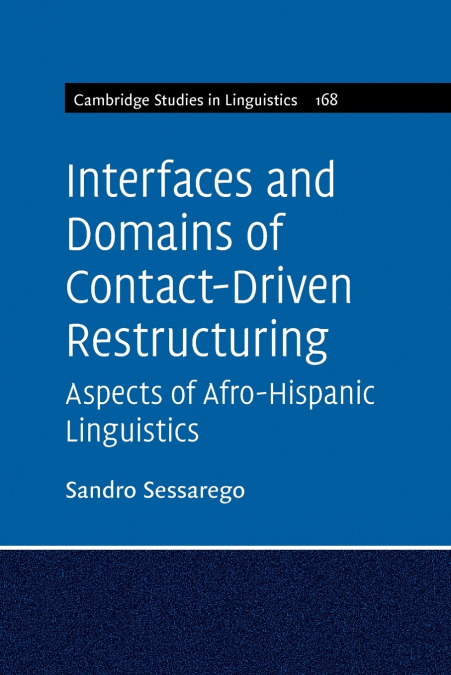
  • Interfaces and Domains of Contact-Driven Restructuring
    Sandro Sessarego
    ...
    Disponible

    37,27 €

  • New Horizons in Prescriptivism Research
    This book investigates the connections between evaluative judgements on language and the larger social, cultural, and political issues that shed light on the practice of prescriptivism. The chapters cover three main areas: language, which represents the traditional roots of the study of linguistic norms in authoritative (historical) manuals and judgemental attitudes to language...
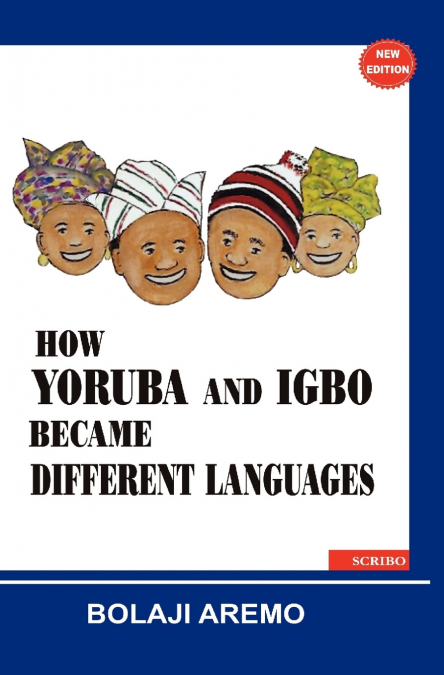
  • How Yoruba and Igbo Became Different Languages
    Bolaji Aremo
    The main objective of this study is to identify examples of genetically related Igbo and Yoruba words that might serve as further evidence in support of some linguists’ claim that the two languages developed from the same parent language. The author is a retired head of the Department of English at Obafemi Awolowo University, Nigeria. ...
    Disponible

    53,75 €