THE THOMPSON SUBMACHINE GUN

THE THOMPSON SUBMACHINE GUN

Anon

13,25 €
IVA incluido
Disponible
Editorial:
Naval & Military Press
Año de edición:
2021
Materia
Segunda Guerra Mundial
ISBN:
9781783319497
13,25 €
IVA incluido
Disponible
Añadir a favoritos

One of a series of Second World War booklets on weapons intended for the training of recruits, this treatise is dedicated to the venerable military type Thompson .45 calibre submachine gun. This model (M1928) had provisions for box and drum magazines. It had a Cutts compensator, cooling fins on the barrel, employed a delayed blowback action and its charging handle was on the top of the receiver. The booklet describes the correct loading and unloading of the gun; the action of the firing mechanism; the magazines; the action of gases and the cooling system and notes on how to deal with jams and stoppages.The Thompson was used in World War II in the hands of Allied troops as a weapon for scouts, non-commissioned officers (corporal, sergeant and higher) and patrol leaders, as well as commissioned officers, tank crewmen and soldiers performing raids on German positions. In the European theatre, the gun was widely utilised in British and Canadian commando units, as well as in the US Army paratrooper and Ranger battalions, where it was issued more frequently than in line infantry units because of its high rate of fire and its stopping power, which made it very effective in the kinds of close combat these special operations troops were expected to undertake. Military Police were fond of it, as were paratroopers, who ’borrowed’ Thompsons from members of mortar squads for use on patrols behind enemy lines. The gun was prized by those lucky enough to get one and proved itself in the close street fighting that was encountered frequently during the invasion of France. Through Lend-Lease, the Soviet Union also received the Thompson, but due to a shortage of appropriate ammunition, its use was not widespread.The Thompson submachine gun was also known informally as the ’Tommy Gun’, ’Street Sweeper’, ’Annihilator’, ’Chicago Typewriter’, ’Trench Broom’, ’Chicago Submachine’, ’Chicago Piano’, ’Chicago Style’, ’Chicago Organ Grinder’, ’Drum Gun’, ’the Chopper’, ’the Tommy Boy’ or simply ’the Thompson’, and is one of the most well-known and recognised firearms in history.

Artículos relacionados

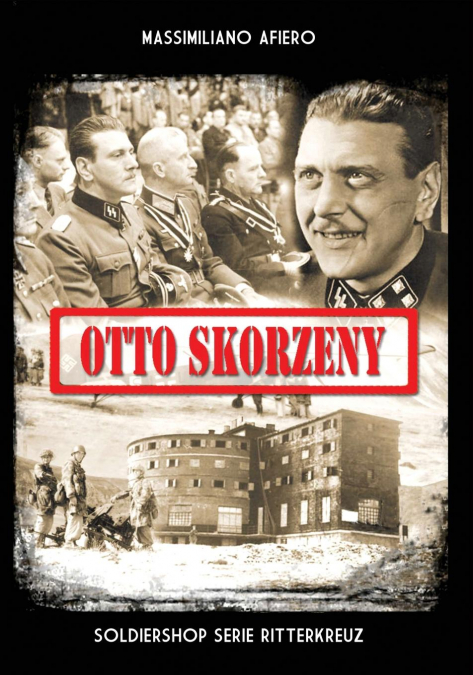
  • Otto Skorzeny
    Massimiliano Afiero
    Quella di Otto Skorzeny è sicuramente una delle figure più controverse ed interessanti della Seconda Guerra Mondiale, alla quale molti storici hanno dedicato articoli e libri, per esaltare o denigrare le sue azioni che nel bene o nel male furono comunque straordinarie: la liberazione del Duce sul Gran Sasso, l'operazione 'Panzerfaust' nell'ottobre del 1944, l'operaz...
    Disponible

    28,71 €

  • A Terrible Revenge
    Alfred-Maurice de Zayas
    ...
    Disponible

    24,93 €

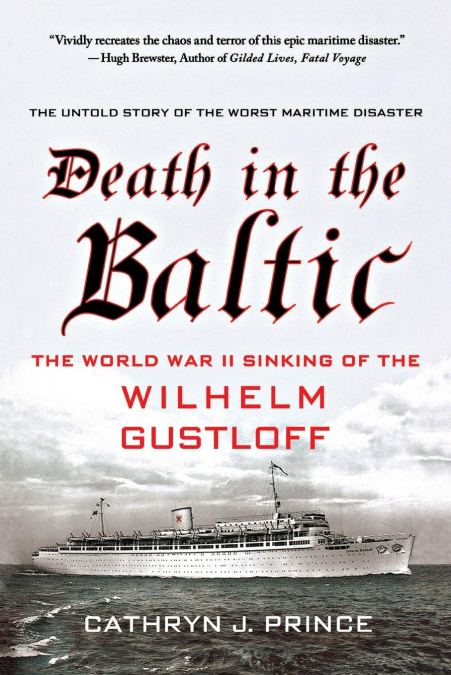
  • Death in the Baltic
    Cathryn J Prince
    January 1945: the outcome of World War II has been determined. The Third Reich is in free fall as the Russians close in from the east. Berlin plans an eleventh-hour exodus for the German civilians trapped in the Red Army’s way. More than 10,000 women, children, sick, and elderly pack aboard the Wilhelm Gustloff, a former cruise ship. Soon after the ship leaves port, three Sovie...
    Disponible

    16,52 €

  • The Greatest Test of Courage
    Ronda Hassig
    Edward Mack had everything: a wife, a newborn son, and his dream job. But as a West Point graduate stationed in the Philippines, his life changed forever on December 7, 1941. Not long after, he would survive the Bataan Death March, Camps O’Donnell and Cabanatuan. At Cabanatuan, he headed an underground operation to get food and medicine for his fellow prisoners. His final desti...
    Disponible

    11,87 €

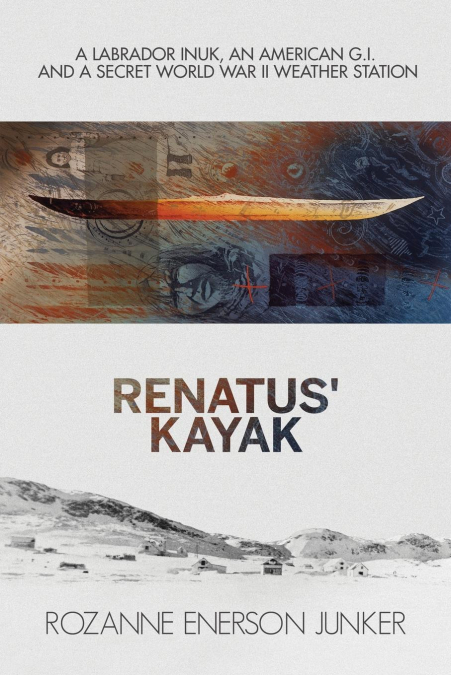
  • Renatus' Kayak
    Rozanne Enerson Junker
    Woody Belsheim had one question when he gave his niece, Rozanne Enerson Junker, a miniature sealskin kayak made for him in 1944 by Inuit hunter Renatus Tuglavina: Would it be possible for you to find out what happened to Renatus...and to his daughter, Harriot?Woody had seldom spoken about his World War II service when he and six other G.I.s manned a secret American weather stat...
    Disponible

    14,59 €

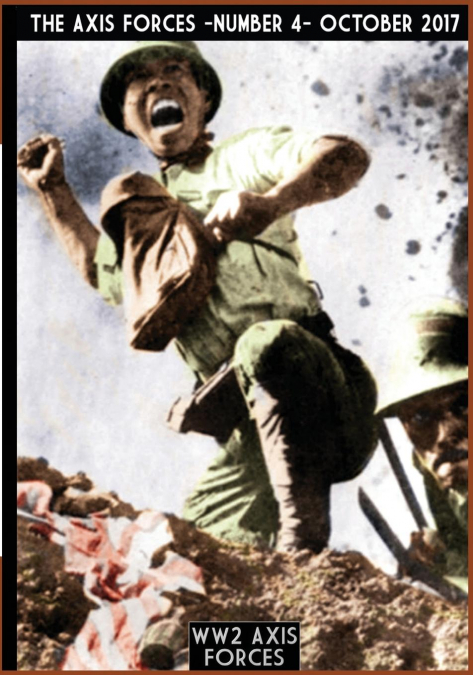
  • The Axis Forces 4
    Massimiliano Afiero
    Book magazine dedicated to the German, Italian and Japanese armed forces and their allies during WW2.In this issue. The battle of Narva 1944, The japan in war, The Italian Alpine Division Monterosa of RSI. Eastern Volunteer insignia. Heinrich Sonne. Knight Cross Holder. ...
    Disponible

    12,71 €

Otros libros del autor

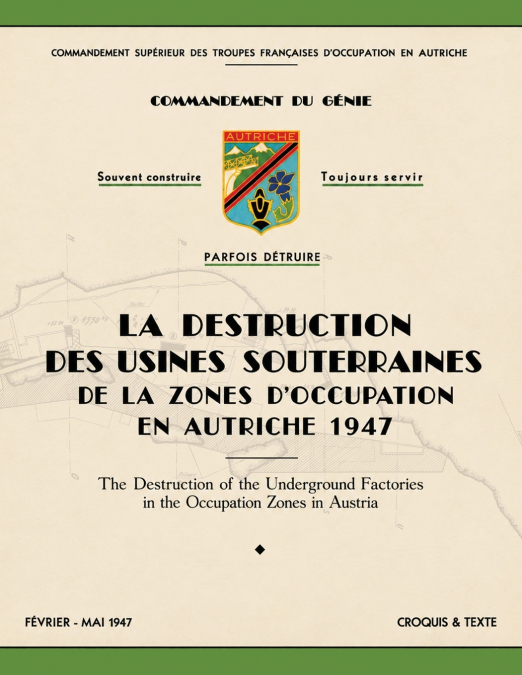
  • La Destruction des Usines Souterraines de la Zones d’Occupation en Autriche.
    Anon
    This work documents the post-war demolition of clandestine underground industrial installations in Austria by French military engineers, who employed explosives and other engineering methods to dismantle former Nazi production facilities. The sites examined include Schwaz, where an extensive medieval silver mine was converted into an underground aircraft component factory staff...
  • 48 ROYAL MARINE COMMANDO The Story 1944-46
    Anon
    48 (Royal Marine) Commando was formed in March 1944, the last British commando unit raised during the Second World War. Created from the 7th Royal Marine Battalion and Mobile Naval Base Defence Organisation units, it trained at Achnacarry under Lieutenant Colonel James Moulton before joining the all-Royal Marine 4th Special Service Brigade alongside No. 41, No. 46 and No. 47 Co...
    Disponible

    25,93 €

  • 6th BATTALION ROYAL SCOTS FUSILIERS 1939-46
    Anon
    The 6th Battalion, Royal Scots Fusiliers (RSF) was a Territorial Army unit that served in two distinct phases during the Second World War: the 1940 Battle of France and the 1944-45 campaign in North-West Europe.Service Timeline and Key OperationsBattle of France (1940): Assigned to the 51st (Highland) Infantry Division, the battalion served as part of the British Expeditionary ...
    Disponible

    26,05 €

  • ADMINISTRATIVE HISTORY OF THE OPERATIONS OF 21 ARMY GROUP ON THE CONTINENT OF EUROPE 6th June 1944- 8th May 1945
    Anon
    The Administrative History of the Operations of 21 Army Group on the Continent of Europe, 6 June 1944-8 May 1945 (1945) is a comprehensive logistical study detailing how Field Marshal Montgomery’s British and Canadian forces were sustained from D-Day to V-E Day. Covering Normandy, the advance through Belgium and Holland, and the Rhine crossing, it documents the supply, transpor...
    Disponible

    56,39 €

  • INCIDENTS WITH THE SEVENTH BATTALION THE SOMERSET LIGHT INFANTRY In France And Germany From June 1944 To June 1945
    Anon
    Raised on 24 August 1939 as a 2nd Line duplicate of the 5th Battalion, the 7th Battalion initially served with the 5th and 6th in 135th Brigade, 45th Division before transferring on 11 September 1942 to 214th Infantry Brigade, alongside the 5th Duke of Cornwall’s Light Infantry and the 9th Somerset Light Infantry (later replaced by the 1st Worcestershire Regiment).Following the...
    Disponible

    24,54 €

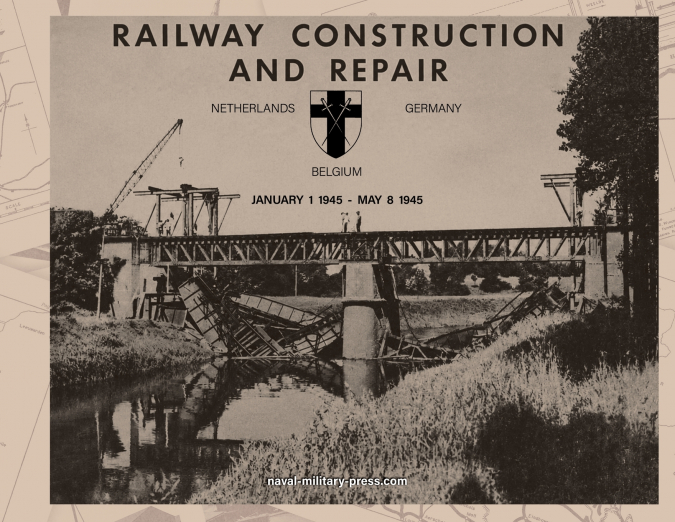
  • RAILWAY CONSTRUCTION AND REPAIR Netherlands, Belgium, Germany, January 1 1945-May 8 1946. Directorate of Transportation 21 Army Group - BLA.
    Anon
    From January 1945 to May 1946, the Royal Engineers’ Directorate of Transportation managed railway construction and repair for the 21 Army Group, later the British Army of the Rhine. Tasked with restoring vital supply lines across Belgium, the Netherlands, and into Germany, the work was carried out by specialised Railway Construction and Maintenance Groups and Companies.A highli...
    Disponible

    26,88 €