Etienne Psaila
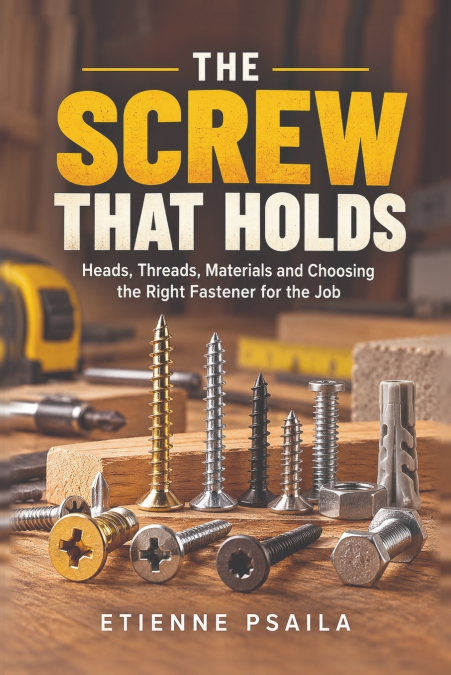
A screw may be one of the smallest components in a household repair, yet choosing the wrong one can mean damaged timber, stripped threads, loose fittings and repairs that never seem to last. Why do screw heads have different shapes? What is the difference between Phillips, Pozidriv and Torx drives? When should a screw be longer, thicker or made from stainless steel? Why do some screws grip timber securely while others damage furniture boards or fail to hold in masonry? The Screw That Holds takes the confusion out of choosing fasteners. Written for beginners and everyday DIY enthusiasts, this practical guide explains screw heads, drives, threads, points, lengths, diameters, materials and protective coatings in clear, accessible language. From wood screws and furniture fasteners to plasterboard screws, masonry fixings, wall plugs, self-drilling screws, nuts and bolts, Etienne Psaila explores how different fastening systems work, why common mistakes happen and what makes a connection dependable. Rather than offering complicated engineering calculations or questionable shortcuts, this book builds the understanding needed to recognise suitable fasteners, avoid unnecessary damage and approach ordinary household repairs with greater confidence. Because the best screw is not necessarily the biggest or strongest-looking one. It is the one that suits the job. Disclaimer: This book provides general educational DIY guidance and does not replace manufacturer instructions, applicable safety requirements or professional assessment for structural, overhead, electrical or safety-critical fixings. All trademarks and product names mentioned belong to their respective owners. Their inclusion does not imply affiliation or endorsement.