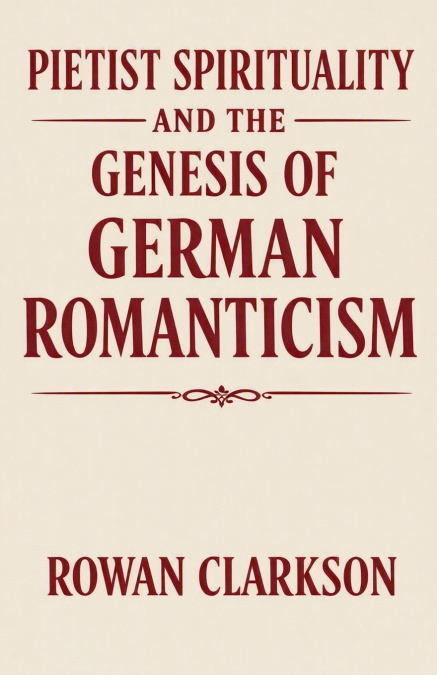
Rowan Clarkson
The genealogy of the modern self is inextricably bound to a profound reorientation of human consciousness that unfolded across the seventeenth and eighteenth centuries, culminating in a radical transformation of how individuals understood their relationship to truth, God, nature, and the self. At the center of this intellectual and cultural mutation lies the concept of interiority-an orientation toward the inner life as the primary arena of meaning, authenticity, and ultimate reality. While standard narratives of modernity frequently privilege the Cartesian cogito or the empirical rationalism of the Enlightenment as the decisive engines of modern selfhood, such accounts remain fundamentally incomplete without accounting for the quiet yet explosive revolution wrought by Pietism and Romanticism. Together, these two movements forged an epistemology of the heart, a conviction that true knowledge-what Pietist thinkers termed Herzenserkenntnis-is not merely an intellectual assent to abstract propositions, but an affective, experiential, and intensely personal inward reality.