The Kushan Empire

The Kushan Empire

Shane Larson

19,70 €
IVA incluido
Disponible
Editorial:
Peak Grizzly Publishing
Año de edición:
2026
Materia
Historia de Asia
ISBN:
9798907140615
19,70 €
IVA incluido
Disponible
Añadir a favoritos

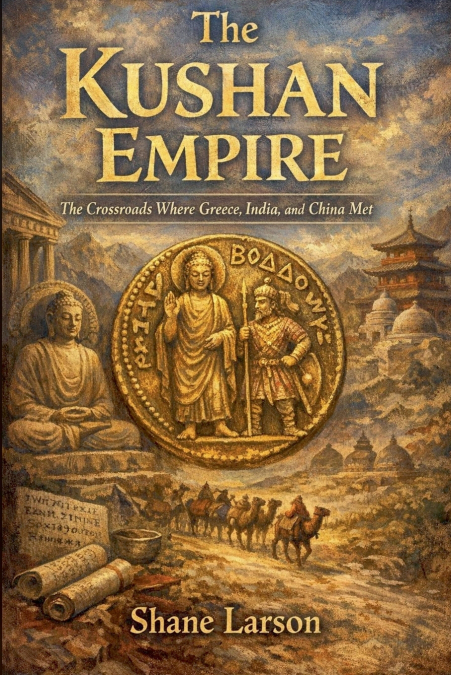
For roughly four hundred years, Buddhist art refused to show the Buddha. Then an empire founded by displaced nomads put him on a gold coin.The coin is smaller than a thumbnail. On one side, a king in a heavy nomad coat stands at a fire altar, circled by Greek letters spelling out an Iranian language. On the other, a haloed figure in a monastic robe raises his hand beside a word no Greek ever needed: BODDO. The Buddha. On money. The king who struck it descended from the Yuezhi, a nomad confederacy driven off the Chinese frontier by the Xiongnu three centuries earlier - and by his reign, beginning around AD 127, their empire ran from the Oxus to the Ganges plain and taxed every road worth taxing between Rome’s east and China’s west.Almost nobody has heard of them. The Kushan Empire left no narrative history in any language - no chronicle, no successor with a reason to remember it. For over a century, scholars could not agree on when its greatest king was crowned, and its second king had no known name at all until 1993, when workmen in northern Afghanistan turned up a stone carrying the royal genealogy in the dynasty’s own voice.This book reconstructs the empire the only way it can be reconstructed: from the objects. The coins that carry the king-list no scribe wrote down. The Greek city on the Oxus with a theater and a gymnasium. The sealed storerooms at Begram packed with Roman glass, Chinese lacquer, and Indian ivory. And the sculpture of Gandhara and Mathura, where - under Kushan patronage - the Buddha acquired a human face whose descendants stand in every Buddhist country on earth.What you’ll learn:How the Xiongnu drove the Yuezhi west - and how the refugees ended up ruling an empireWhy Bactria was still Greek two centuries after Alexander, and what the conquerors chose to keepHow historians build a king-list from coins when no king-list survivesWhat the Rabatak inscription revealed in 1993, and why a single stone rewrote the dynastyHow Gandhara and Mathura gave the Buddha a face - and why the question of which came first remains honestly unresolvedHow Kushan taxation turned the Silk Road into a through route, with Roman gold flowing in and silk flowing outHow Buddhism crossed a continent to China along Kushan-taxed roadsThis book is for you if:You love Silk Road history and suspect the middle of the route has a story of its ownYou’ve stood in front of Gandharan sculpture in a museum and wondered who paid for itYou enjoy history that shows its working - how a conclusion was reached, not just what it isYou want ancient history beyond Greece and Rome, told without jargonYou’d rather hear exactly what we don’t know than a tidy story the evidence can’t supportBy the last page, you’ll be able to stand in front of a Kushan coin or a Gandharan relief and read it unaided. Start with the gold coin that says BODDO.
Artículos relacionados

  • Understanding Aikido
    Jan J Sunderlin
    Understanding Aikido: Essential Information and Perceptions (Special Edition) presents an historical, cultural, and philosophical look at the development of the Japanese martial art of Aikido. Sunderlin focuses on the influences brought to bear on Morihei Ueshiba, the founder of Aikido, and the subsequent cultivation of the latter's martial art as a vessel of Budo. The author a...
  • Not by Love Alone
    Margaret Mehl
    Suzuki Shin'ichi, the Tokyo String Quartet, Midori - How did Japanese violinists manage to revolutionize violin teaching, win international competitions, conquer Western concert stages, study at world-famous conservatoires and take up positions in leading orchestras and prestigious music faculties? What enabled the Japanese to master Western classical music within a few decades...
    Disponible

    29,32 €

  • Pictures in Transformation
    Luca Maria Olivieri
    ...
    Disponible

    54,79 €

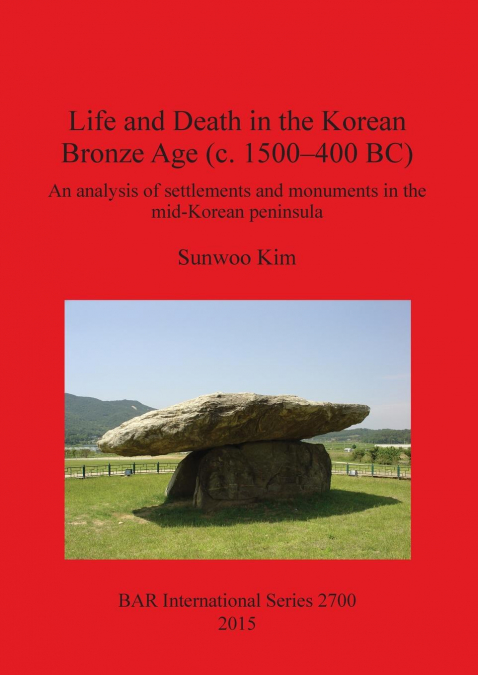
  • Life and Death in the Korean Bronze Age (c. 1500-400 BC)
    Sunwoo Kim
    This research focuses on the Bronze Age in selected areas of Korea; Seoul, Incheon, and Gyeonggi province. Two forms of evidence - settlements and monuments - are taken into account to identify their relationship with landscape and the social changes occurring between ca. 1500 to 400 cal BC. Life and death in the Bronze Age in Korea has not been synthetically investigated befor...
    Disponible

    108,34 €

  • South Asian Archaeology 2007
    Proceedings of the 19th Meeting of the European Association of South Asian Archaeology in Ravenna, Italy, July 2007.                     ...
    Disponible

    182,04 €

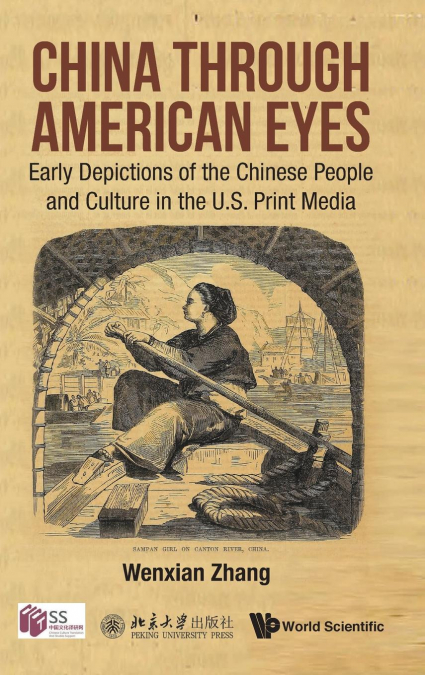
  • CHINA THROUGH AMERICAN EYES
    Wenxian Zhang / ZHANG WENXIAN
    Cultural understanding between the United States and China has been a long and complex process. The period from the mid-nineteenth century to the early twentieth century is not only a critical era in modern Chinese history, but also the peak time of illustrated news reporting in the United States. Besides images from newspapers and journals, this collection also contains pictur...

Otros libros del autor

  • A Ton of Goods
    Shane Larson
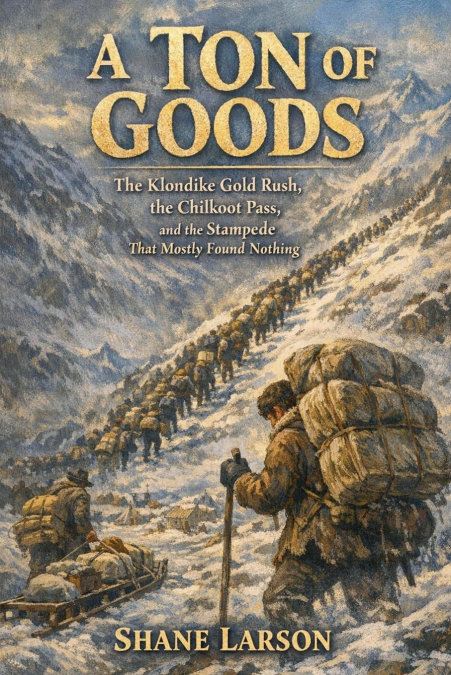
    About 100,000 people set out for the Klondike. The creeks had been staked from end to end eleven months before the first of them left home.On 17 July 1897 the steamer Portland tied up in Seattle with sixty-eight miners and what one newspaper called a ton of gold aboard. It was closer to two. Within a week the continent was packing. What the miners also told the reporters, and t...
  • Adrianople
    Shane Larson
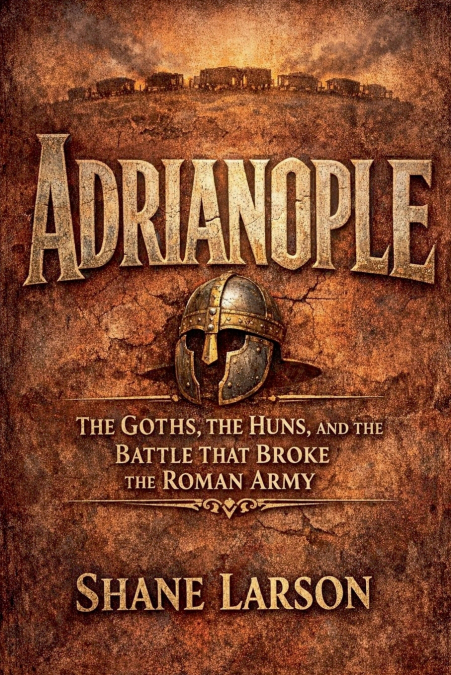
    The Goths who destroyed a Roman emperor and two-thirds of his army on 9 August 378 had been invited in. The Roman army had ferried them across the Danube itself.In the summer of 376, tens of thousands of Goths, driven off their land by a steppe people the Romans had barely heard of, camped on the north bank of the Danube and asked the Emperor Valens to admit them as settlers an...
  • Plague and Fire
    Shane Larson
    The Great Fire of London did not end the Great Plague. When the fire started, the plague had been dying out for nearly a year, and it had been worst in the suburbs outside the walls, which never burned.That is one of the most repeated facts in English history, and this book opens by taking it apart with the city’s own records. In 1665 the Bills of Mortality counted 68,596 plagu...
  • The English Civil War
    Shane Larson
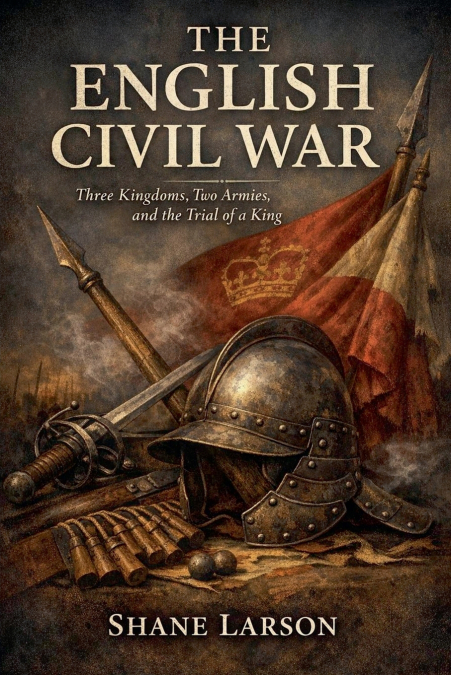
    By one careful estimate, a larger share of the people of England died in the Civil War than in the First World War, and in Scotland and Ireland the share was higher still. The war is remembered as a constitutional argument with a scaffold at the end of it. It was also the most destructive war ever fought on British soil.And it did not begin in England. It began in Edinburgh in ...
  • The Princes in the Tower
    Shane Larson
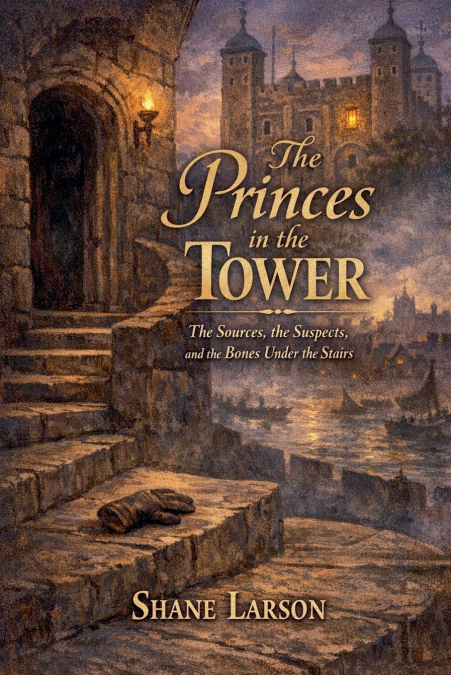
    There is no contemporary record that the princes in the Tower were murdered. There is no contemporary record that they were not. The confession that is supposed to have settled it was announced in 1502, written up some thirty years after the event, and has never been seen.Edward IV died on 9 April 1483. His elder son, Edward, was twelve and king on the spot; his younger son, Ri...
    Disponible

    20,98 €

  • The Powder Treason
    Shane Larson
    Guy Fawkes did not lead the Gunpowder Plot. He did not plan it and recruited nobody. He was hired abroad, for what he knew about powder, by Robert Catesby, the man who conceived the plot, found the money, chose the day, and died four days after the cellar door opened, untried and unconfessed. Four centuries on, the hired man is the effigy, and there is no word in the language d...
    Disponible

    20,95 €