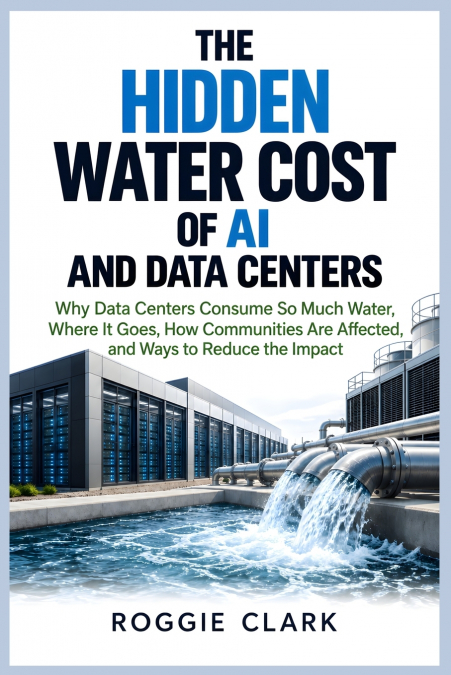
Roggie Clark
Artificial intelligence, cloud computing, streaming services, search engines, and countless digital tools depend on massive data centers operating around the clock. While these facilities may seem like an invisible part of the digital world, they rely on very real physical resources. One of the most important, and increasingly controversial, is water.The Hidden Water Cost of AI and Data Centers explores why modern data centers can consume immense quantities of water, where that water goes, and why the rapid expansion of AI infrastructure has brought data center water usage into the public spotlight.This beginner-friendly guide takes readers inside the cooling systems that keep thousands of servers from overheating. Along the way, you will learn how cooling towers, chillers, evaporative cooling, liquid cooling, and other technologies work, why some systems require far more water than others, and the important difference between water withdrawal and actual water consumption.You will also discover the less visible side of the issue, including the water associated with electricity generation, the growing computing demands of artificial intelligence, and why the total water footprint of a data center can extend beyond the water used directly at the facility.Beyond the technology, this book examines the growing public backlash surrounding data center water consumption. As new facilities are proposed and constructed across the United States and around the world, residents, environmental organizations, utilities, local governments, and technology companies are confronting difficult questions about freshwater supplies, groundwater, drought, infrastructure capacity, transparency, and who should have priority when multiple users depend on the same limited water resources.Rather than stopping at the problem, the book also explores what can be done about it. Readers will learn about reclaimed and non-potable water, closed-loop systems, alternative cooling technologies, direct-to-chip liquid cooling, immersion cooling, improved water efficiency, better data center siting, water reuse, reporting requirements, and other approaches that could reduce the industry’s dependence on freshwater.Whether you are concerned about the environmental impact of AI, live near a proposed data center, work in technology, follow the rapid expansion of artificial intelligence, or simply want to understand why data centers use so much water, this guide provides an accessible look at one of the most important infrastructure questions behind our increasingly digital world.