Liora Lynx
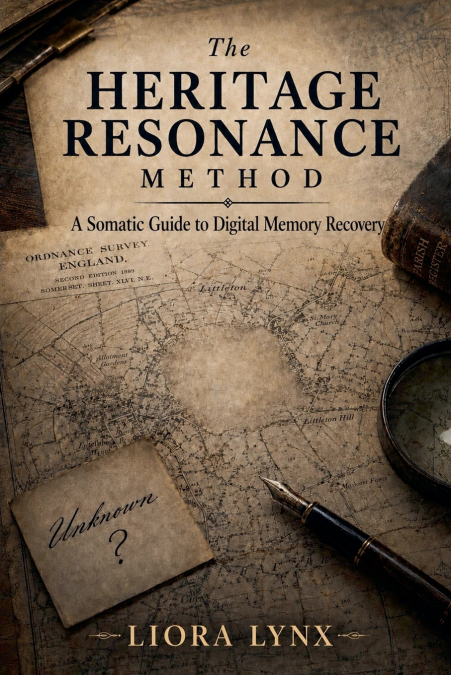
You stop in front of an old family photograph. A face at the edge of the group catches you. Your chest tightens. Something shifts. You don’t know who he is-and yet the response feels exact, almost like recognition.Most people do one of two things next: dismiss the feeling, or treat it as proof. Both close the investigation before it begins.The Heritage Resonance Method offers a third way.This is a practical, grounded guide for anyone researching British and Irish family history who has ever felt a physical or emotional response to a record, a place, a name, or a silence-and wondered what, if anything, it means. It shows you how to work with that response without letting it rewrite the past.You will learn to:Separate what the body reports in the present from what documents can actually establishNotice contraction, warmth, numbness and breath as data about you, not evidence about your ancestorsUse resonance as a research compass (it points) while documents decideNavigate living relatives, family stories and contradictions without forcing them into one narrativeHandle sensitive discoveries with ethical clarityBuild a personal archive that future readers can trust-complete with confidence levels, sources and honest uncertaintyThe greater part of the book is practical: observation protocols, signal cards, ethical disclosure records, conversation frameworks and legacy templates you can use immediately. The conceptual sections supply the clarity that keeps those practices honest.You are not outside the material you research. Your expectations, family position and hopes already shape what you notice. This book makes that visible-and turns it into a working advantage rather than a source of distortion.At the end you will hold clearer questions, better-labelled findings, and an archive that tells the next generation not only what you discovered, but how sure you were, what remained unknown, and what you chose to leave private.The past does not speak through your body.Your body does speak about how you meet the past.Learn to hear both-and keep them distinct.