AJR
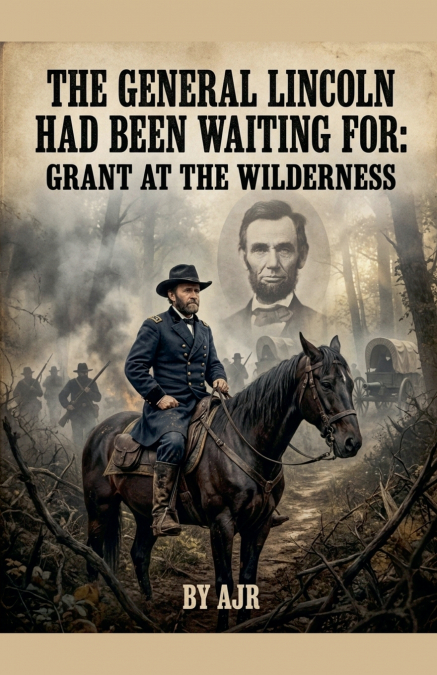
In the spring of 1864, Abraham Lincoln needed a general who would not stop.For three years, Union armies had fought Robert E. Lee in Virginia, winning battles but failing to destroy the Army of Northern Virginia. Generals had advanced, attacked, suffered terrible casualties-and retreated. The war dragged on while the presidential election of 1864 approached and Northern patience began to fray.Then Ulysses S. Grant arrived.A former failed farmer and clerk from Illinois, Grant had risen from obscurity through victories at Fort Donelson, Shiloh, Vicksburg, and Chattanooga. In March 1864, Lincoln placed him in command of all Union armies. Grant understood something his predecessors had not: the Confederacy could survive the loss of cities and territory as long as its armies remained intact.His answer was relentless pressure.In May 1864, Grant crossed the Rapidan River and marched into the Wilderness, a tangled Virginia forest where visibility was almost nonexistent and fire could turn the battlefield into an inferno. For two days, tens of thousands of soldiers fought in smoke, darkness, and confusion. The casualties were staggering. There was no clear battlefield victory. No decisive breakthrough. No triumphant charge.But something had changed.When the fighting ended, Grant did not retreat.He turned south toward Spotsylvania-and then toward Richmond.The General Lincoln Had Been Waiting For explores the Wilderness not simply as a battle, but as the moment when the Union war effort became something fundamentally different: a continuous campaign designed to exhaust and destroy Lee’s army rather than merely seize ground.Through the experiences of Grant, Lincoln, George G. Meade, Robert E. Lee, and the soldiers caught inside the burning forest, this narrative examines the decisions, pressures, failures, and calculations behind one of the most consequential campaigns of the American Civil War.The Wilderness produced no obvious winner.Yet its significance would be felt all the way to Appomattox.