Nakel Nikiema
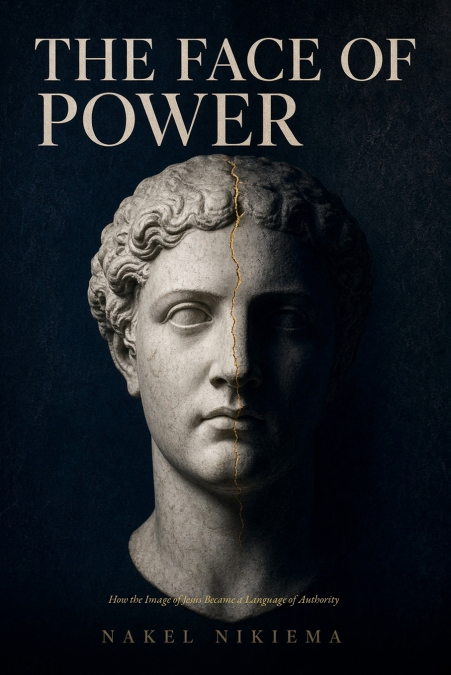
What happens when an image becomes more powerful than the evidence behind it?For one of the most recognizable figures in human history, the historical record is remarkably silent. The Gospels tell us what Jesus said, where he traveled, whom he challenged, and how he died. They do not describe his face.Yet billions of people can picture him.The Face of Power: How the Image of Jesus Became a Language of Authority investigates how that image was created, transformed, and carried across centuries-and how it became entangled with ideas of holiness, legitimacy, race, leadership, and power.Drawing on archaeology, ancient texts, skeletal evidence, clothing, coins, early Christian art, Byzantine and Roman iconography, forensic reconstruction, art history, theology, and modern psychology, Nakel Nikiema separates what can reasonably be known about the historical Jesus from what later generations imagined.The book follows the image from the earliest surviving Christian depictions to imperial Rome, Byzantine iconography, Renaissance Europe, colonial expansion, American popular Christianity, the Shroud of Turin, modern forensic reconstructions, and global traditions that have pictured Jesus through their own cultural lenses.But this is not simply a book about what Jesus may have looked like.It asks a deeper question:How did one face become a language of authority?As the image of Christ changed, it absorbed the visual vocabulary of emperors, kings, artists, churches, nations, and mass culture. Once established, that image did more than reflect power-it could also influence how people imagined goodness, trust, leadership, and who appeared naturally suited to hold authority.The book also examines what happened when communities excluded by dominant religious imagery created representations of their own, from African and Black Christian traditions to other global expressions of Christ. Rather than replacing one supposedly definitive image with another, Nikiema argues for a more historically honest understanding: every image carries meaning, but no later portrait should be mistaken for a photograph of the historical Jesus.Written for believers, skeptics, historians, leaders, and general readers alike, The Face of Power approaches a sensitive subject with respect for faith and a commitment to evidence. Where the historical record is uncertain, the book says so. Where scholarship disagrees, the disagreement is acknowledged.The historical face of Jesus may be lost.The history of how humanity replaced it is not.And that history reveals something profound-not only about religion, but about the enduring relationship between image and authority.