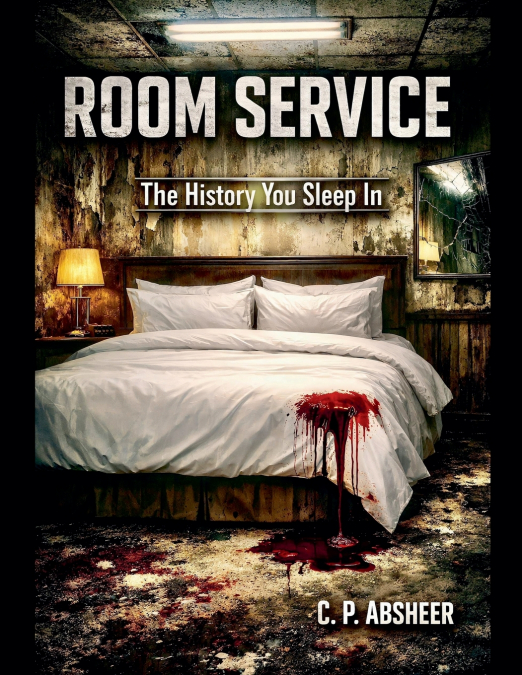
C. P. Absheer
You check in. You assume nothing has happened here. That assumption is the foundation of modern hospitality. It is also a lie.We are trained to believe that a fresh coat of paint and a new mattress can reset a room. We believe that once a building is renamed-when an asylum becomes a wedding venue, or a factory becomes a loft-its history is erased.Room Service exists to challenge that belief. Not because buildings are haunted, but because architecture is functional.A building is a machine designed to do a job. It manages bodies. It directs flow. It captures heat, amplifies sound, and enforces posture. When the crisis that built the structure ends-when the fever breaks, the war stops, or the factory closes-the machine does not stop working. It simply waits for the next occupant.Through a series of chilling, clinically precise examinations, Room Service reveals the invisible mechanics of the spaces we trust the most:The Fever Ward: Why a brick room might radiate heat decades after the sick are gone.The Wash: Why the plumbing in a boutique hotel vibrates at 3:00 a.m., mimicking the rhythm of an execution annex.The Silence: How soundproofed offices reproduce the psychological pressure of Cold War listening rooms.The Stacking Room: Why you can’t catch your breath in a basement that once held more bodies than it was built for.Part architectural history, part psychological horror, Room Service is a guide to the residue of function. It asks you to look past the decor and notice what the building is actually doing to you.The room is ready. It has always been ready. The only question is whether you are willing to notice what it continues to do.