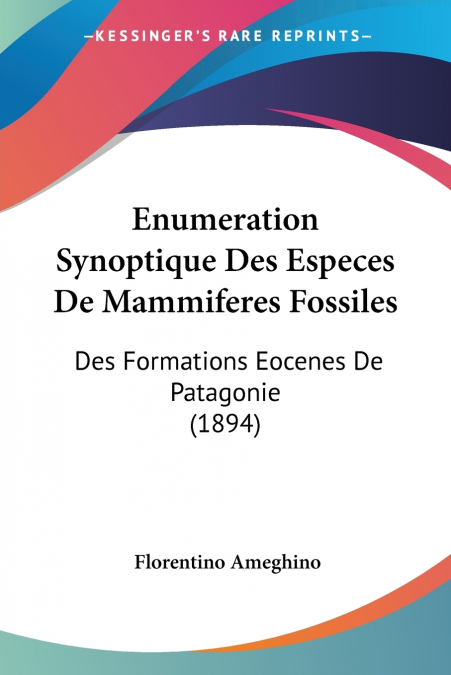
Florentino Ameghino
'Mamiferos Fosiles De La Republica Argentina' es una obra monumental de la paleontologÃa sudamericana, escrita por el eminente cientÃfico Florentino Ameghino. En este volumen, se presenta un estudio exhaustivo sobre la diversidad y evolución de los mamÃferos prehistóricos que habitaron el territorio argentino durante diversas eras geológicas. La obra destaca por su meticulosa descripción taxonómica y su análisis profundo de los restos óseos, proporcionando una base cientÃfica fundamental para el entendimiento de la fauna extinta del continente.Ameghino explora en este texto la morfologÃa y la filogenia de diversas especies, estableciendo conexiones cruciales entre los estratos geológicos y la historia biológica de la región. El libro no solo sirve como un catálogo técnico de inmenso valor académico, sino que también representa un hito en la historia de la ciencia natural. A través de descripciones detalladas, el autor ofrece una visión profunda de los ecosistemas antiguos y los procesos evolutivos que dieron forma a la biodiversidad de América del Sur. Esta obra sigue siendo una referencia indispensable para paleontólogos, investigadores y entusiastas de la historia natural interesados en la riqueza fósil de la República Argentina.This work has been selected by scholars as being culturally important, and is part of the knowledge base of civilization as we know it. This work was reproduced from the original artifact, and remains as true to the original work as possible. Therefore, you may see the original copyright references, library stamps (as most of these works have been housed in our most important libraries around the world), and other notations in the work.This work is in the public domain in the United States of America, and possibly other nations. Within the United States, you may freely copy and distribute this work, as no entity (individual or corporate) has a copyright on the body of the work.As a reproduction of a historical artifact, this work may contain missing or blurred pages, poor pictures, errant marks, etc. Scholars believe, and we concur, that this work is important enough to be preserved, reproduced, and made generally available to the public. We appreciate your support of the preservation process, and thank you for being an important part of keeping this knowledge alive and relevant.