Jacqueli Finley
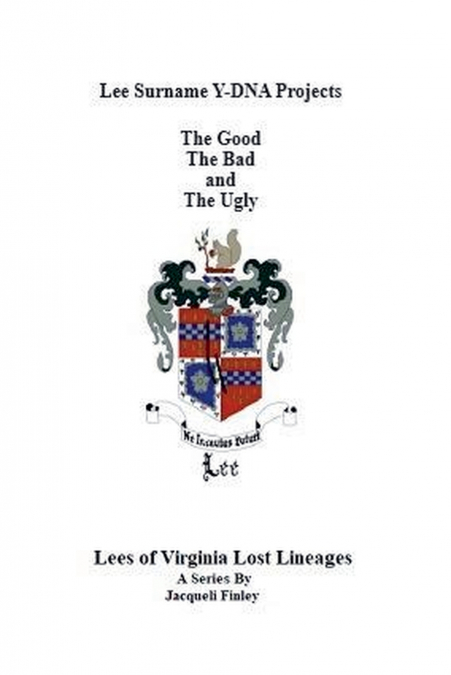
The Good The Bad and The Ugly - Jacqueli Finley’s Argument Against Lee Y-DNA Project Claims and the Methodology She Used to Correct the WrongdoingJacqueli Finley firmly challenges the conclusions of certain Lee Y-DNA Projects, asserting that they have wrongfully excluded many legitimate descendants of the Lees of Virginia. She argues that these projects rely too narrowly on Y-DNA paternal-line testing, which traces only one direct male lineage. This limited approach, she contends, has led to false lineage determinations and the disconnection of authentic family branches, erasing rightful descendants from the historical record.Finley highlights that historical realities-such as adoptions, non-paternal events, and incomplete documentation-make Y-DNA alone an unreliable tool for comprehensive genealogical verification. By focusing exclusively on a single paternal marker, these projects have denied recognition to descendants with well-documented genealogical, historical, and familial ties to the Lees of Virginia.To address these injustices, Finley developed an autosomal linear triangulation method. This method uses autosomal DNA-inherited from both parents-combined with historical records and oral family histories to identify shared genetic segments across multiple related individuals. By triangulating DNA matches among both recognized and disputed descendants, she was able to confirm genetic relationships to the Lees of Virginia that Y-DNA testing had failed to detect.Her work has restored rightful connections to many descendants who had been wrongly excluded, creating a more inclusive and evidence-based framework for lineage confirmation.Finley’s findings are documented in her 'Lees of Virginia Lost Lineages' series, which exposes the flaws in past genealogical conclusions and reconnects lost branches of the family tree. Her forthcoming book, Lee Surname Y-DNA Projects: The Good The Bad and The Ugly, seeks to permanently correct these wrongful claims-calling out poor genealogical curation and flawed Y-DNA interpretations, while setting a higher standard for accuracy, fairness, and historical truth in family research.