INDIAN CIVILIZATION

INDIAN CIVILIZATION

Hasan Kanat

16,37 €
IVA incluido
Disponible
Editorial:
Al-Umeri
Año de edición:
2026
Materia
Historia de Asia
ISBN:
9786250052631
16,37 €
IVA incluido
Disponible
Añadir a favoritos

This study applies the five-stage model of Retrodictive Structural Hermeneutics (RSH 2.0)-Absolute Center → Delegation of Authority → Functional Representation → Localization → Structural Inflation-to Indian civilization. The model is used as a comparative analytical framework rather than as a necessarily linear historical sequence. In comparison with the bureaucratic pluralization examined in China, the normative/syncretic pluralization identified in Korea, and the network pluralization examined in Japan, the Indian case highlights a distinctive form of Ontological Pluralization. The study examines major configurations of Indian religious thought from the Vedic and Upaniṣadic traditions through the Purāṇic and Epic traditions, Bhakti traditions, and the traditions of Buddhism and Jainism (Flood, 1996; Olivelle, 1998; Jamison & Brereton, 2014).Particular attention is given to the tradition of the thirty-three devas, especially the dialogue in the Bṛhadāraṇyaka Upaniṣad (3.9.1-2), where numerical plurality is progressively reduced to thirty-three and ultimately to one. The thirty-three are identified as the eight Vasus, eleven Rudras, twelve Ādityas, Indra, and Prajāpati. A closely related formulation occurs in the Śatapatha Brāhmaṇa (11.6.3.5-10). These passages provide a textual basis for examining the relationship between plurality, functional representation, and cosmological centralization.The study argues that Indian religious history is better understood not as a linear developmental sequence, but as a field of recurrent structural transformations in which conceptions of the Absolute, divine representation, and cosmological plurality undergo processes of ontological compression and expansion. The Indian case consequently provides a test of whether RSH can account for pluralization without presupposing a universal evolutionary trajectory.Keywords: Indian religion; Hinduism; Brahman; Ātman; ṛta; Varuṇa; Prajāpati; Trimūrti; avatāra; bhakti; Veda; Upaniṣad; Purāṇa; Bhagavad Gītā; Buddhism; Jainism; thirty-three devas; 33 koti; Ontological Pluralization; Avataric Functional Representation; Ontological Compression; Ontological Expansion; Ontological Synthesis; Retrodictive Structural Hermeneutics (RSH 2.0).

Artículos relacionados

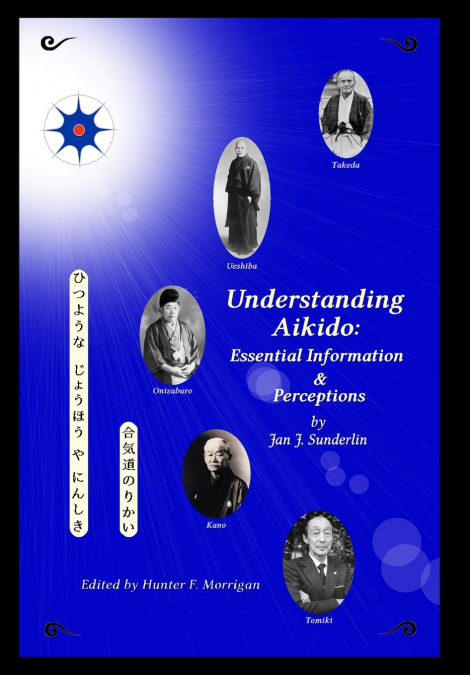
  • Understanding Aikido
    Jan J Sunderlin
    Understanding Aikido: Essential Information and Perceptions (Special Edition) presents an historical, cultural, and philosophical look at the development of the Japanese martial art of Aikido. Sunderlin focuses on the influences brought to bear on Morihei Ueshiba, the founder of Aikido, and the subsequent cultivation of the latter's martial art as a vessel of Budo. The author a...
    Disponible

    63,06 €

  • Not by Love Alone
    Margaret Mehl
    Suzuki Shin'ichi, the Tokyo String Quartet, Midori - How did Japanese violinists manage to revolutionize violin teaching, win international competitions, conquer Western concert stages, study at world-famous conservatoires and take up positions in leading orchestras and prestigious music faculties? What enabled the Japanese to master Western classical music within a few decades...
    Disponible

    29,32 €

  • Pictures in Transformation
    Luca Maria Olivieri
    ...
    Disponible

    54,79 €

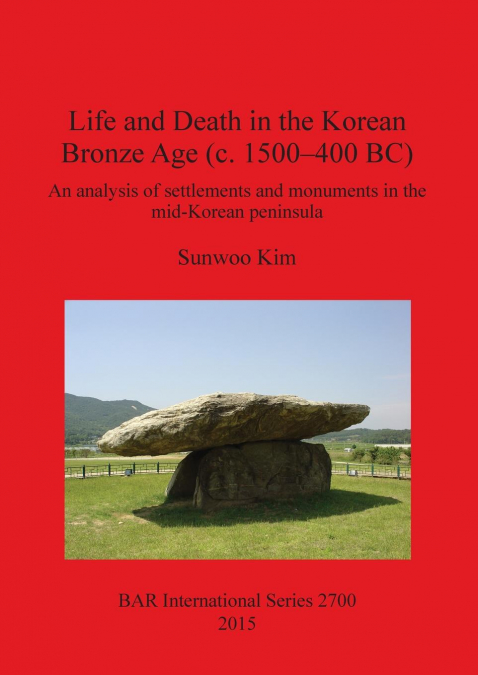
  • Life and Death in the Korean Bronze Age (c. 1500-400 BC)
    Sunwoo Kim
    This research focuses on the Bronze Age in selected areas of Korea; Seoul, Incheon, and Gyeonggi province. Two forms of evidence - settlements and monuments - are taken into account to identify their relationship with landscape and the social changes occurring between ca. 1500 to 400 cal BC. Life and death in the Bronze Age in Korea has not been synthetically investigated befor...
    Disponible

    108,34 €

  • South Asian Archaeology 2007
    Proceedings of the 19th Meeting of the European Association of South Asian Archaeology in Ravenna, Italy, July 2007.                     ...
    Disponible

    182,04 €

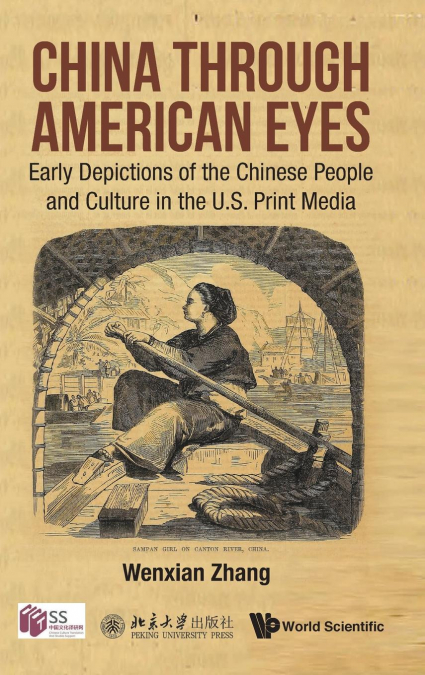
  • CHINA THROUGH AMERICAN EYES
    Wenxian Zhang / ZHANG WENXIAN
    Cultural understanding between the United States and China has been a long and complex process. The period from the mid-nineteenth century to the early twentieth century is not only a critical era in modern Chinese history, but also the peak time of illustrated news reporting in the United States. Besides images from newspapers and journals, this collection also contains pictur...