Dear Edgar

Dear Edgar

Claudio Pedretti

23,88 €
IVA incluido
Disponible
Editorial:
HGR Publishing
Año de edición:
2026
Materia
Ética y filosofía moral
ISBN:
9791298679009
23,88 €
IVA incluido
Disponible
Añadir a favoritos

How can we navigate a world whose complexity exceeds our understanding, and still act responsibly within it?The world around us is far richer than the labels, categories and divisions through which we try to interpret and understand it. We simplify to make our way through this richness, giving it forms we can grasp, discuss and act upon. Something is always left outside the frame. The danger begins when we lose sight of what we have left out and mistake the world we have made comprehensible for the world as it is. The illusion of knowing can then become the illusion of control.In Dear Edgar, Claudio Pedretti draws on Edgar Morin’s thought and their friendship to explore how we might navigate the complexity of the world while learning to live with its uncertainty. Embracing uncertainty becomes part of responsible action: a reason to remain attentive, question our assumptions and reconsider our choices as their consequences unfold.Moving between philosophy and lived experience, Pedretti examines love as a way of knowing and the passage through which responsibility becomes care. Ancient myths, religious traditions and the challenges of artificial intelligence bring these questions into the relationships we form, the institutions we build and the decisions that shape our common future.At the heart of the book is convergent responsibility: how people with different beliefs can act towards shared purposes without erasing their differences. In a world no one fully understands or controls, cooperation requires us to recognise both the reach of our actions and the limits of our perspective.With a preface by Edgar Morin, Dear Edgar invites us to look beyond familiar categories and reconsider how we inhabit a world that will always exceed our understanding.
Artículos relacionados

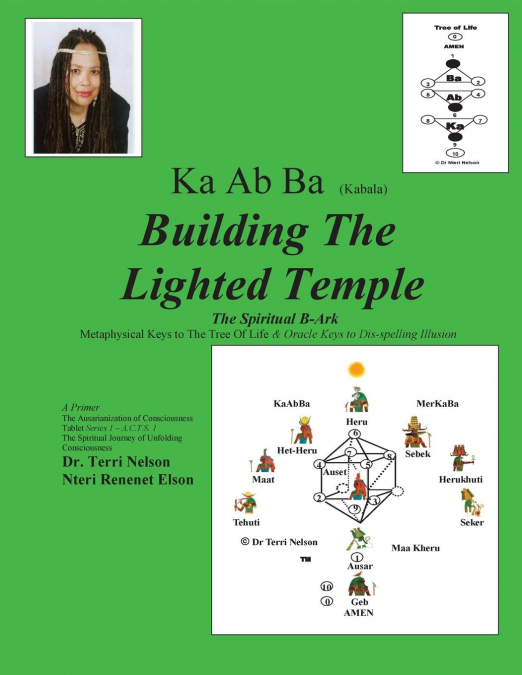
  • Ka Ab Ba Building The Lighted Temple
    Dr Terri R. Nelson / Dr Terri RNelson
    The book KaAbBa Building The Lighted Temple/Metaphysical Keys to the Tree of Life draws a circle that is inclusive of the Afrikan origin of the Ancient Kemetic/Egyptian wisdom. It reveals the undeniable root and link of Ancient Africa to all the religious systems that would develop worldwide. This book is explosive in its power to convey the meaning of KaAbBa, the Medu Neter  (...
    Disponible

    37,41 €

  • Technoethics and the Evolving Knowledge Society
    Rocci Luppicini
    Recently, there has been a major push to rediscover the ethical dimension of technology across the sciences, social sciences, and humanities. Technoethics and the Evolving Knowledge Society: Ethical Issues in Technological Design, Research, Development, and Innovation examines human processes and practices connected to technology embedded within social, political, and moral sph...
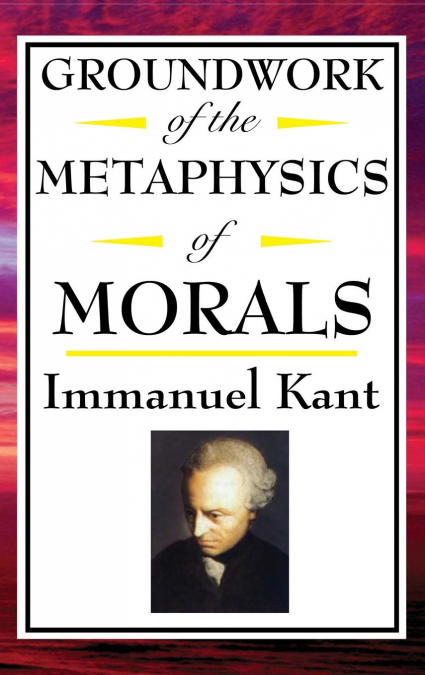
  • Kant
    Immanuel Kant
    Kant’s Groundwork of the Metaphysics of Morals is one of the most important works in modern moral philosophy. It belongs beside Plato, Aristotle, Machiavelli, and Hobbes. Here Kant sets out to articulate and defend the Categorical Imperative - the fundamental principle that underlies moral reasoning - and to lay the foundation for a comprehensive account of justice and human vi...
  • On the Duty of Civil Disobedience
    HENRY DAVID THOREAU
    Civil Disobedience argues that citizens should not permit their governments to overrule their consciences, and that they have a duty to avoid allowing their acquiescence to enable the government to make them the agents of injustice. Thoreau was motivated in part by his disgust with slavery and the Mexican-American War, but the sentiments he expresses here are just as pertinent ...
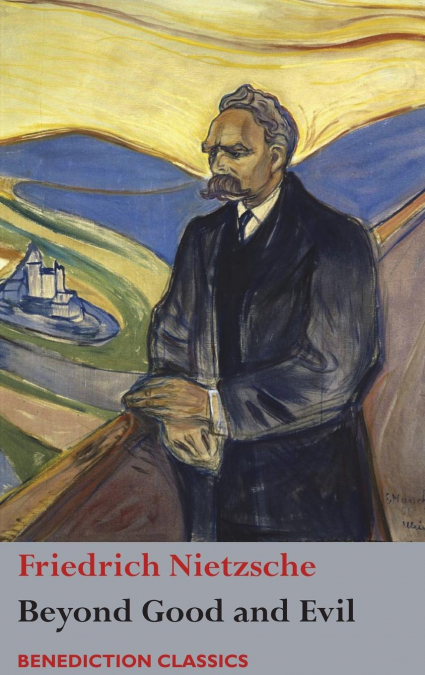
  • Beyond Good and Evil
    Friedrich Nietzsche
    Nietzsche, though primarily a philosopher, wrote widely on art, philology, history, religion, tragedy, culture, and science.  In 1886, at the height of his powers, he published Beyond Good and Evil.  Here he examines much of the best of human thought--dogmatic philosophy, Judeo-Christian morality, science and democracy – and finds it lacking.  Rejecting “slave-morality” he pres...
  • Beyond Good and Evil
    Friedrich Nietzsche
    Nietzsche, though primarily a philosopher, wrote widely on art, philology, history, religion, tragedy, culture, and science.  In 1886, at the height of his powers, he published Beyond Good and Evil.  Here he examines much of the best of human thought--dogmatic philosophy, Judeo-Christian morality, science and democracy – and finds it lacking.  Rejecting “slave-morality” he pres...
    Disponible

    9,99 €