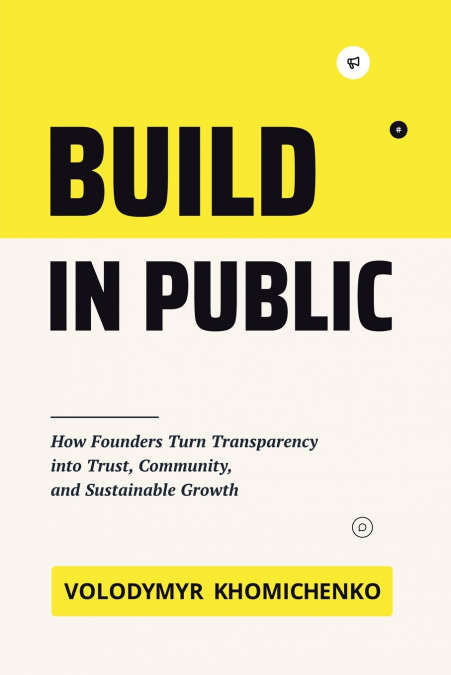
Volodymyr Khomichenko
One founder raised $124 million, hired four hundred people, and became the most quotable man in his industry. His company earned about six hundred thousand dollars in a year and was gone in a week. Another worked alone with a laptop, posted his revenue when he felt like it, and has made millions a year for over a decade.Both were building in public. Both were doing, on the surface, exactly the same thing.So why does transparency become an engine of growth for some founders, do almost nothing for others, and actively destroy a few?Build in Public answers that question from forty researched cases - solo makers and billion-dollar companies, quiet successes and public collapses. The answer is not what either camp in the argument believes. Transparency is not an engine. It creates nothing. It is a multiplier, and what it multiplies is whatever you have actually built.From that single shift comes a working model: Base × Coefficient × Sign. The four pillars of a business that transparency can never create for you. The two gates that decide whether openness works at all - or turns against you. The three things that make it powerful, and the one thing it can never do, which is make a market willing to pay.Along the way: why a beloved product with a hundred thousand devoted users still died. Why honesty at your own expense is the only trust signal a competitor cannot copy. Why the founder’s own reputation often outlives the company. When to stop publishing your numbers. What building in public costs the person doing it - and how to survive long enough for it to compound.The book closes with a playbook, a diagnostic list of the seven ways this goes wrong, and an audit to run on your own business before you publish anything.For founders and makers deciding how much of their work to build in the open - and for the marketers and operators who advise them.