Herman Melville
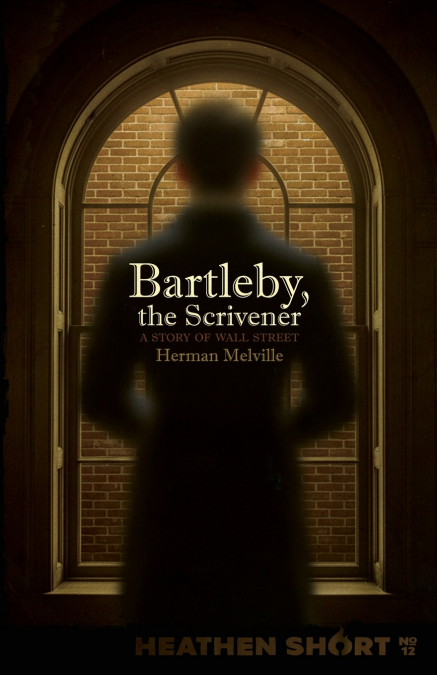
Herman Melville (1819-1891) was an American author and poet of the American Renaissance period. In 1853, he serialized his short story 'Bartleby, the Scrivener: A Story of Wall Street' in two parts in Putnam’s Magazine, then collected it in his 1856 work The Piazza Tales. As the story comes into focus, Bartleby arrives as a cipher - silent, spectral, and slipping out of register with the world around him. His famous refrain, 'I would prefer not to,' signals his slow withdrawal from the balance of meaning. As the narrative sharpens, Bartleby blurs: fading into abstraction, refusal, and a slow bankruptcy of being. Melville’s tale is not merely a Wall Street satire but a lament for a soul lost within it. Long before the phrase 'quiet quitting' entered the lexicon, Melville summoned its phantom: a man who performs the minimum, then less, then nothing, until even his presence becomes a kind of absence - a man who disappears without leaving. Bartleby does not rage against the machine; he simply ceases to turn its gears. In this, Bartleby is not a relic but a prophecy: the ghost we’ve become - clocked in, tuned out, and complicit in our own erasure.