Lady Wilde (Speranza)
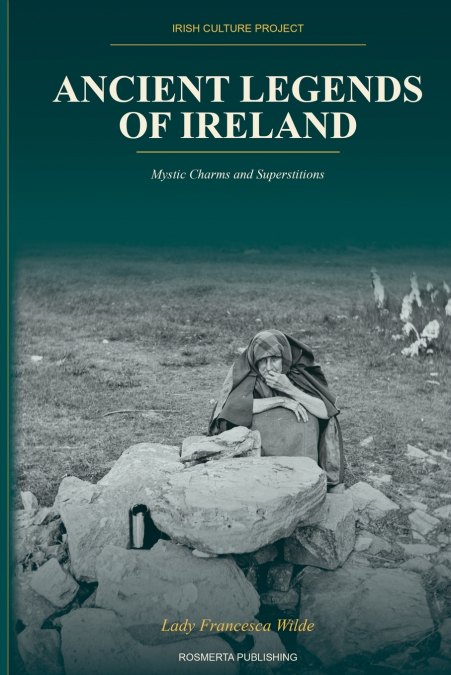
Lady Wilde was a poet of the Young Ireland movement, a translator, a salon hostess, and the mother of Oscar. She wrote as Speranza. By the time this book appeared in 1887 she had outlived her husband by ten years, and one of her reasons for making it was to put his work to use.Sir William Wilde was an eye and ear surgeon, and among the most active antiquarians of his generation. His practice took him through the west of Ireland at a time when the older beliefs were still ordinary, and he wrote down what he was told. Lady Wilde drew on those notes, added what she had gathered herself, and arranged the whole into a survey of Irish folk belief as it stood before the famine changed everything.The book moves through the fairy world first. The Sidhe and their hills, the banshee who cries for the old families, changelings and how to test for them, the merrow, the pooka, fairy music and the fairy dance, and the many stories of people taken and returned. Then it turns to the practical business of living alongside all this: the evil eye and its remedies, the fairy doctors and the herbs they used, charms for toothache and burns and the fairy dart, the ceremonies of Beltane and Samhain and Saint John’s Eve, the omens read from birds and weather and dreams, and the long observances of birth, marriage, wake and burial.That second half is what makes the book unusual. Most Victorian collections gather tales. This one records a working system of belief, with its practitioners, its materials and its rules, set down by two people who had spent their lives listening to it.This edition reproduces the Ward and Downey text of 1887 in a fresh typeset, with Lady Wilde’s own arrangement and her introductory essays preserved. A closing glossary covers the Irish beings, terms and places the book uses without stopping to define them, with the Irish forms set beside the Anglo-Irish spellings of the period.It sits in the Irish Culture Project alongside Yeats’s Fairy and Folk Tales of the Irish Peasantry, which draws several of its pieces from this very collection.Part of the Irish Culture Project from Rosmerta Publishing.