Inicio > Sociedad y ciencias sociales > Sociología y antropología > Sociología > Sociología del trabajo y el esfuerzo > A Smarter National Surveillance System for Occupational Safety and Health in the 21st Century
A Smarter National Surveillance System for Occupational Safety and Health in the 21st Century

A Smarter National Surveillance System for Occupational Safety and Health in the 21st Century

AA.VV

63,39 €
IVA incluido
Disponible
Editorial:
National Academies Press
Año de edición:
2018
Materia
Sociología del trabajo y el esfuerzo
ISBN:
9780309462990
63,39 €
IVA incluido
Disponible
Añadir a favoritos

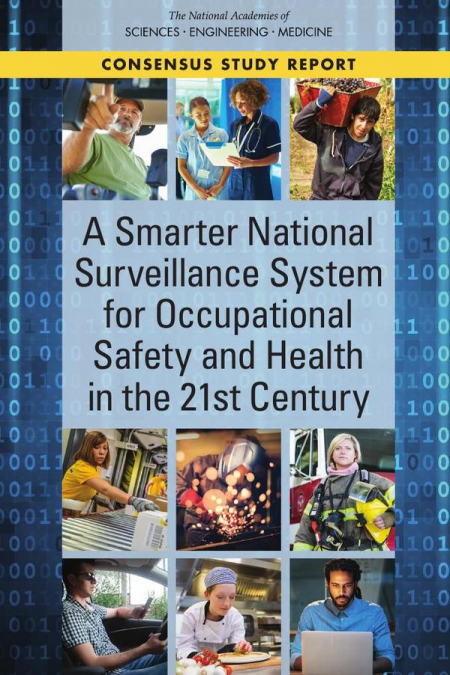
The workplace is where 156 million working adults in the United States spend many waking hours, and it has a profound influence on health and well-being. Although some occupations and work-related activities are more hazardous than others and face higher rates of injuries, illness, disease, and fatalities, workers in all occupations face some form of work-related safety and health concerns. Understanding those risks to prevent injury, illness, or even fatal incidents is an important function of society.Occupational safety and health (OSH) surveillance provides the data and analyses needed to understand the relationships between work and injuries and illnesses in order to improve worker safety and health and prevent work-related injuries and illnesses. Information about the circumstances in which workers are injured or made ill on the job and how these patterns change over time is essential to develop effective prevention programs and target future research. The nation needs a robust OSH surveillance system to provide this critical information for informing policy development, guiding educational and regulatory activities, developing safer technologies, and enabling research and prevention strategies that serves and protects all workers.A Smarter National Surveillance System for Occupational Safety and Health in the 21st Century provides a comprehensive assessment of the state of OSH surveillance. This report is intended to be useful to federal and state agencies that have an interest in occupational safety and health, but may also be of interest broadly to employers, labor unions and other worker advocacy organizations, the workers’ compensation insurance industry, as well as state epidemiologists, academic researchers, and the broader public health community. The recommendations address the strengths and weaknesses of the envisioned system relative to the status quo and both short- and long-term actions and strategies needed to bring about a progressive evolution of the current system.

Artículos relacionados

  • Les comptes des pauvres
    Jean-François Laé
    Bien avant la publication de L’Argent des pauvres aux éditions du Seuil, en 1985, une réception relativement élogieuse et consensuelle sur la vie quotidienne d’anciens habitants de bidonvilles relogés en cité de transit dans les années 1975/1982, une longue enquête fut nécessaire. Soit un ensemble de récits de terrain, des comptes mensuels en solde négatif, des acrobaties et se...
    Disponible

    24,44 €

  • Improving Measures of Science, Technology, and Innovation
    The National Center for Science and Engineering Statistics (NCSES), at the U.S. National Foundation, is 1 of 14 major statistical agencies in the federal government, of which at least 5 collect relevant information on science, technology, and innovation activities in the United States and abroad. The America COMPETES Reauthorization Act of 2010 expanded and codified NCSES’s rol...
    Disponible

    28,03 €

  • Blueprint for the Future
    The scientific work of women is often viewed through a national or regional lens, but given the growing worldwide connectivity of most, if not all, scientific disciplines, there needs to be recognition of how different social, political, and economic mechanisms impact women’s participation in the global scientific enterprise. Although these complex sociocultural factors often o...
    Disponible

    35,31 €

  • Building the U.S. Battery Industry for Electric Drive Vehicles
    Since 1991, the National Research Council, under the auspices of the Board on Science, Technology, and Economic Policy, has undertaken a program of activities to improve policymakers’ understandings of the interconnections of science, technology, and economic policy and their importance for the American economy and its international competitive position. The Board’s activities ...
    Disponible

    44,67 €

  • Intangible Assets
    Intangible assets—which include computer software, research and development (R&D), intellectual property, workforce training, and spending to raise the efficiency and brand identification of firms—comprise a subset of services, which, in turn, accounts for three-quarters of all economic activity. Increasingly, intangibles are a principal driver of the competitiveness of U.S.-ba...
    Disponible

    36,35 €

  • Rising Above the Gathering Storm
    In a world where advanced knowledge is widespread and low-cost labor is readily available, U.S. advantages in the marketplace and in science and technology have begun to erode. A comprehensive and coordinated federal effort is urgently needed to bolster U.S. competitiveness and pre-eminence in these areas. This congressionally requested report by a pre-eminent committee makes f...
    Disponible

    58,76 €