Rory Denham
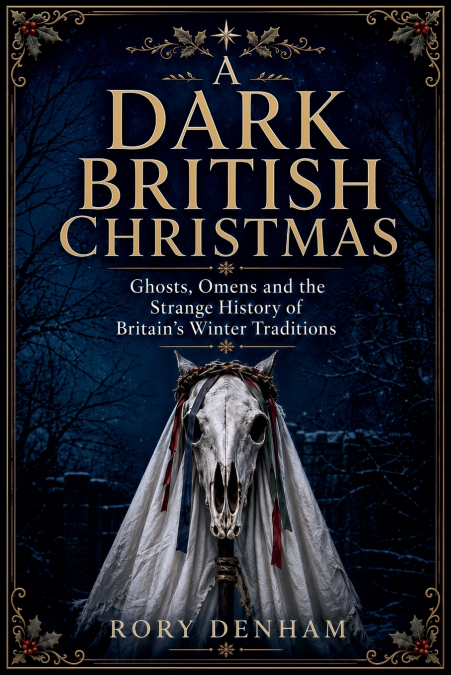
On Christmas morning in the 1640s, a Scottish minister walked through his parish and looked inside every house. He was checking that nobody had roasted a goose.That is British midwinter tradition as its own records describe it. Not simply snow and spirits, but cold, hunger, obligation, luck, ritual - and a surprising amount of enforcement.A household in Shropshire is blamed, generations later, for an avalanche that killed its neighbours because an ancestor once lent a man a light.A young woman stands in a Nottinghamshire street at one in the morning, unable to enter her own home until a male relative can be found to cross the threshold first.In Edinburgh, men fight over who gets to knock.And some of the ghosts everyone expects are missing entirely.Shakespeare, a Victorian antiquary and the informants of a Welsh country parson preserve versions of the same belief across three centuries: Christmas Eve could be one of the safest nights in the calendar, when the cock crowed through the darkness and wandering spirits had no power to walk.So where did the darkness come from?Twenty chapters. One custom at a time. Each traced as far back into the record as the surviving evidence allows.There is the horse’s skull that came to the door in Wales and had to win a singing contest before it could enter.The great Yule log dragged indoors behind a horse, with servants drinking free for as long as it burned.The poor who arrived on the shortest days of the year and did not necessarily consider themselves beggars.The child made a bishop for a day while the real clergy stepped aside.Masked men who briefly became difficult to identify - including five sword dancers prosecuted after appearing in a Scottish kirkyard in 1623.There are houses whose luck could supposedly be carried away in a coal, swept out with the dust, or taken across the threshold with borrowed fire.There are wassails for people, wassails for trees, first-footers, corpse-like horses, midnight cattle, prophetic flames and the long struggle over whether Christmas should be kept at all.Some of these customs are older than they look. Many are much younger than people assume.One of Britain’s most photographed midwinter ceremonies, for example, emerged from a nineteenth-century revival and acquired an ancient ancestry only later - with enough documentation surviving for the transformation to be watched almost step by step.What you get from reading it:A clear account of which British Christmas traditions are genuinely old, which are later inventions or revivals, and which survive only because antiquaries, parish officials, journalists or folklorists happened to write them down.An understanding of what you are actually seeing at a wassail, a Mari Lwyd procession, a hooden horse night or a first-footing custom - and why the explanation on the poster may not tell the whole story.A dated guide to the dark season from St Thomas’s Day to Candlemas, designed to be read straight through or opened according to the date on the calendar.This is not a collection of invented ghost stories, and it is not another catalogue of vaguely 'pagan' Christmas customs.It is a source-led journey through the strange history of Britain’s winter traditions: ghosts, omens, masks, fires, household rules, suppressed festivals and the stories later generations told about them.For readers of Ronald Hutton, British folklore, social history and anyone who has ever wondered what the Twelve Days of Christmas were actually for.